
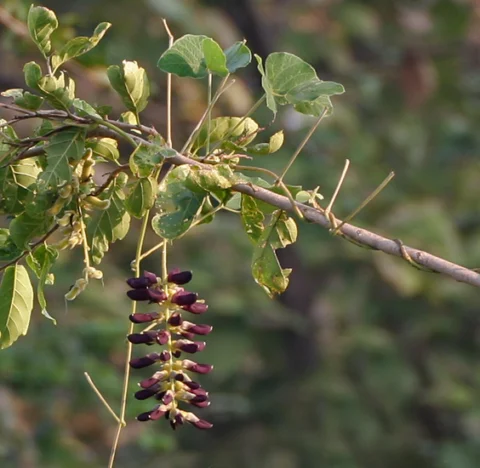
Introduction
Velvet beans (Mucuna pruriens) are an underutilized legume in Southern Africa, yet they possess numerous agricultural and medicinal qualities that make them a valuable addition to organic farming systems. This article highlights the potential of velvet beans in the region, focusing on their organic cultivation, benefits, and sustainable use.
Benefits of Velvet Beans
- Soil Fertility: Velvet beans are excellent nitrogen-fixers, enhancing soil fertility without the need for chemical fertilizers. This makes them ideal for organic farming systems, promoting healthier soil and better yields.
- Medicinal Properties: These beans are known for their high L-DOPA content, useful in treating Parkinson’s disease, and have anti-diabetic and anti-inflammatory properties, making them a valuable plant in traditional medicine.
- Pest Management: The cultivation of velvet beans can naturally deter pests, reducing the need for chemical pesticides in organic farming.
- Nutritional Aspect: Though they require careful processing to reduce their L-DOPA content, velvet beans are a good source of protein and essential nutrients once properly prepared.
Cultivation Guidelines
1. Site Selection
- Choose areas with warm temperatures and well-drained soil, typical of many Southern African climates suitable for legumes.
2. Planting
- Timing: Sow seeds directly into the ground after the risk of frost has passed, ideally at the start of the warm season.
- Soil Preparation: Enhance soil with organic compost to improve nutrient content and structure.
- Seed Depth: Seeds should be planted at a depth of approximately 2.5 to 5 cm, spaced about 7.5 to 10 cm apart.
3. Care and Management
- Watering: Moderate watering is necessary, especially in periods of low rainfall, to maintain steady growth.
- Weeding: Regular weeding is crucial to prevent competition for nutrients, particularly in the early growth stages.
- Pest Monitoring: Despite their natural resistance to pests, regular checks are essential to manage any emerging pest threats organically.
4. Harvesting
- Collect the pods when they have matured but before they burst open, typically a few months after planting, depending on the climate and soil conditions.
Safety and Processing
Proper processing is critical for reducing the high L-DOPA levels in velvet beans to make them safe for consumption. Traditional methods include prolonged boiling and changing the cooking water multiple times to detoxify the beans effectively.
Conclusion
Velvet beans represent a multifaceted asset for organic farmers in Southern Africa. By integrating these beans into their farming practices, growers not only enhance soil quality and biodiversity but also tap into the health and nutritional benefits they offer. The promotion of further research and development of safe processing methods could broaden the use of velvet beans, making them a staple in both agricultural and health sectors in the region. This aligns with sustainable agricultural practices, supporting both environmental health and community well-being.
Here is expanded content for your Velvet Beans (Mucuna) article at https://wiki.living-earth.africa/wiki/velvet-beans-mukuna/, written to improve SEO and inform readers, while maintaining a natural keyword density:
Here’s more:
Velvet Beans in African Agriculture
Velvet beans, also known as Mucuna pruriens, have been used in African farming systems for generations, particularly in low-input, subsistence, or regenerative farming. These vigorous climbers are well-suited to tropical and subtropical climates and are often grown as green manure, forage, or cover crops. In parts of West Africa, Mucuna is used in fallow systems to restore degraded soil, suppress stubborn weeds like Imperata cylindrica, and reduce erosion.
In Namibia and southern Africa, farmers are rediscovering this versatile legume for its many benefits—especially on degraded or sandy soils. Velvet beans fix atmospheric nitrogen and produce a large volume of biomass, making them an ideal soil improver in areas with low organic matter.
Human and Animal Use
Despite its rough exterior and itch-inducing hairs, velvet beans have a long history of culinary and medicinal use. When properly prepared—usually involving soaking, boiling, and discarding the water—they are consumed in India, Central America, and Africa. Traditional healers use the beans for various purposes, including to treat nervous system disorders, as an aphrodisiac, and for male fertility.
For livestock, Mucuna forage and seeds serve as excellent protein sources. Studies have shown that dried velvet bean leaves or pods can replace part of conventional livestock feed, offering a cost-effective solution for smallholder farmers, especially during the dry season. However, raw seeds must be processed properly to reduce L-DOPA content, which can be toxic in high doses.
Regenerative and Permaculture Benefits
Velvet beans are a powerful tool in regenerative agriculture. Their aggressive growth smothers weeds, breaks pest cycles, and shades the soil, helping retain moisture. When integrated into permaculture systems, they function as:
- Nitrogen fixers in guilds or agroforestry systems
- Climbers that can grow on trees or trellises
- Mulch producers to enrich the soil and suppress weeds
- Living fences or green barriers in mixed cropping systems
They pair well with maize, millet, or cassava in intercropping systems, and are ideal for alley cropping between tree rows in food forests.
Cultivation and Management
Velvet beans thrive in well-drained soils and hot climates. They prefer moderate rainfall but are surprisingly drought-tolerant once established. They should be sown at the onset of the rainy season to ensure strong establishment.
Key points:
- Planting depth: 3–5 cm
- Spacing: 50–100 cm between rows
- Germination: 7–14 days
- Growth period: 90–120 days before flowering
- Yield: 1–2 tonnes of dry biomass per hectare under rainfed conditions
In Namibia, they can be grown during the main summer rains or in irrigated systems for year-round biomass production.
Challenges
The primary challenge in using velvet beans is their L-DOPA content—a natural compound with neurological activity. While it has medicinal value, high doses can be harmful. Proper processing techniques, such as prolonged boiling, roasting, or fermentation, are essential before human or animal consumption.
Another consideration is harvesting difficulty—the pods are covered with fine hairs that cause severe itching. Gloves and protective clothing are essential during handling.
Resources & Further Reading
Scientific Articles
- Buckles, D. et al. (1998). Cover Crops in Hillside Agriculture: Farmer Innovation with Mucuna. CIAT.
- Flores, M. et al. (2011). Mucuna in livestock feed: Effects on performance and health. Tropical Animal Health and Production.
Worthwhile Videos
 Watch videoVelvet Beans for Soil Restoration (CIAT)
 Watch videoMucuna in West Africa (IITA)
 Watch videoMucuna as Green Manure (Permies Forum)
Books
- “Restoring the Soil: A Guide for Using Green Manure” – Roland Bunch
- “Tropical Legumes in Agricultural Production” – National Academy Press
- “Farming Systems of Africa” – FAO, Rome
Examples of Use
Ghana
In northern Ghana, smallholder farmers incorporate Mucuna into traditional rotations, reducing the need for synthetic fertilisers. Studies show improved maize yields in the subsequent season.
Brazil
Brazilian agroecological farms often use velvet beans in no-till systems, taking advantage of its rapid biomass production and weed suppression properties.
Uganda
In eastern Uganda, velvet beans are used to restore fallow lands, especially in areas affected by soil nutrient depletion due to continuous maize and bean cropping.
Final Thoughts
Velvet beans (Mucuna pruriens) are a low-cost, high-impact solution for farmers looking to regenerate land, improve yields, reduce dependency on expensive fertilisers, and produce additional food or fodder. Their role in agroecology, permaculture, and regenerative farming is growing across Africa—and with proper awareness and support, they could transform many degraded landscapes into productive systems.
