
Growing Granadilla in an Arid Namibian Climate: A Guide
Granadilla, also known as passion fruit, is a delightful and nutritious fruit that thrives in various climates, including arid regions like Namibia. With its sweet, tangy flavor and versatility in culinary applications, cultivating granadilla can be a rewarding endeavor for gardeners in Namibia. However, success in growing granadilla in such climates requires careful attention to propagation, planting, and ongoing care. Here’s a comprehensive guide to help you achieve thriving granadilla plants in your arid Namibian garden using only organic farming methods and the metric system:
Propagation:
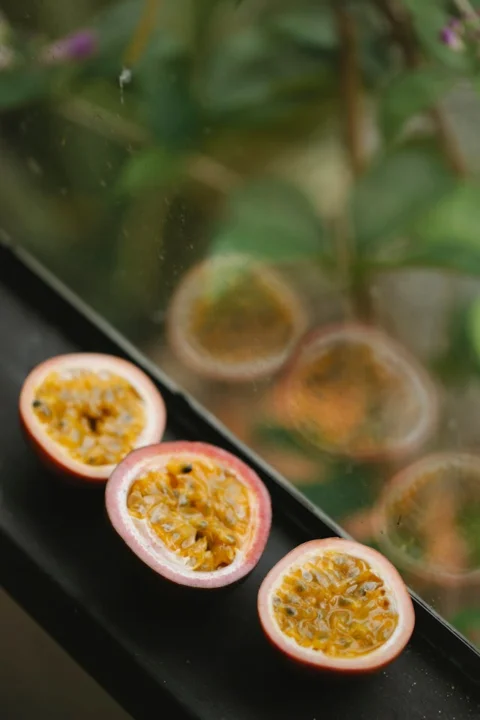
- Seed Collection: Begin by collecting ripe granadilla fruits. Scoop out the seeds and rinse them under water to remove any pulp.
- Seed Preparation: Dry the seeds on a paper towel for a day or two until they are completely dry. This helps prevent fungal growth during germination.
- Germination: Plant the seeds in small pots filled with well-draining soil. Water the soil lightly and place the pots in a warm, sunny location. Keep the soil consistently moist but not waterlogged.
- Transplanting: Once the seedlings have developed several sets of true leaves and are sturdy enough to handle, transplant them into larger containers or directly into the ground.
Planting:
- Site Selection: Choose a planting site that receives full sun for most of the day. Ensure the location is sheltered from strong winds, as granadilla vines can be susceptible to damage.
- Soil Preparation: Granadilla plants prefer well-draining soil with a slightly acidic to neutral pH (around 6.0 to 7.0). Incorporate organic matter such as compost or well-rotted manure into the soil to improve its fertility and structure.
- Planting Depth: Dig a hole slightly larger than the root ball of the plant. Place the plant in the hole and backfill with soil, gently firming it around the base of the plant. Ensure the graft union (if present) is above the soil line.
- Spacing: Space granadilla plants at least 3 to 4 meters apart to allow for proper air circulation and room for the vines to spread.
Care:
- Watering: While granadilla plants are relatively drought-tolerant, they require regular watering, especially during the flowering and fruiting stages. Water deeply but infrequently, allowing the soil to dry out slightly between waterings to prevent root rot.
- Fertilization: Apply a balanced organic fertilizer high in potassium and phosphorus to promote flowering and fruit development. Avoid excessive nitrogen, as it can encourage lush foliage growth at the expense of fruit production.
- Mulching: Mulch around the base of the plants with organic materials such as straw or bark chips to conserve soil moisture, suppress weed growth, and regulate soil temperature.
- Pruning: Prune granadilla vines regularly to remove dead or diseased growth, improve air circulation, and control the size of the plant. Pruning also helps stimulate new growth and fruit production.
- Pest and Disease Control: Keep an eye out for common pests such as aphids, spider mites, and fruit flies, and promptly treat any infestations with organic insecticidal soap or neem oil. Monitor for signs of diseases such as fungal infections and practice good sanitation to minimize the spread.
By following these guidelines for propagation, planting, and care using only organic farming methods and the metric system, you can successfully grow granadilla plants in the arid climate of Namibia. With proper attention and maintenance, you’ll soon be enjoying a bountiful harvest of delicious, homegrown passion fruits. Happy organic gardening!
More on Granadilla (Passion Fruit): Growing, Uses, and Insights
Granadilla, also known as passion fruit, is a delicious, nutrient-rich fruit that grows on a vigorous climbing vine and is well-suited to warmer climates with moderate rainfall. While often thought of as a tropical fruit, certain cultivars adapt well to semi-arid and subtropical environments, including parts of Namibia and South Africa.
Climate and Soil Requirements
Passion fruit vines prefer well-drained, slightly acidic soils with a pH between 5.5 and 6.5. They thrive in full sun and need good air circulation. Although they are sensitive to frost, some varieties (especially the yellow-skinned types) show more tolerance to harsher conditions.
A key aspect for success is installing strong trellises or fences for the vines to climb on. Adequate spacing is important to prevent disease build-up and to allow enough airflow.
Planting and Propagation
The vine can be propagated from seed or cuttings, though cuttings tend to fruit more consistently. Grafting is also used commercially to improve resistance to root diseases. When growing from seed, it’s advised to soak seeds in warm water overnight to improve germination rates. Germination typically occurs within 2–3 weeks.
Watering and Fertilising
While passion fruit vines require regular watering, they are vulnerable to waterlogging. Deep but infrequent watering is often best. Use compost, manure, or organic fertilisers like fish emulsion or seaweed extract to promote strong flowering and fruiting. Mulching helps retain soil moisture and suppress weeds.
Pruning and Maintenance
Pruning is essential to keep the vine productive and manageable. Prune after the main harvest to remove old or diseased wood and encourage new growth. Support vigorous shoots by guiding them along the trellis.
Pollination is usually performed by carpenter bees or other large pollinators. Hand pollination can increase yield in low-insect areas.
Harvesting and Storage
Fruits are typically ready for harvest 60–80 days after flowering. Ripe passion fruits fall off the vine or can be picked once they change colour and become slightly wrinkled. They store well in the fridge for up to two weeks and freeze well for smoothies or pulp extraction.
Culinary and Medicinal Uses
The pulp is used in juices, desserts, jams, chutneys, and salad dressings. Its high vitamin C content and antioxidant profile make it valuable nutritionally. In traditional medicine, various parts of the plant have been used to treat anxiety, insomnia, and inflammation.
Ideas for Use in Namibia:
- Juice production for local markets or school feeding schemes
- Selling pulp or jam at green markets
- Integrating passion fruit vines into agroforestry systems, using them on fences or shade structures
- Dried peel can be composted or added to animal feed in small amounts
Varieties to Consider
- Purple Granadilla (Passiflora edulis) – Smaller fruit, sweeter taste, prefers cooler highlands
- Yellow Granadilla (Passiflora flavicarpa) – Larger, more vigorous, heat-tolerant, often used for juice
- Giant Granadilla (Passiflora quadrangularis) – Grown more for ornamental and novelty purposes
Worthwhile Books
- “Passionfruit: Botany, Production and Uses” by M. da Silva and S. O’Hare – A scientific yet practical guide for growers.
- “The Tropical Agriculturalist: Passionfruit” by J. Morton – A concise manual tailored for tropical farmers.
- “Organic Fruit Growing” by Bridget A. Wiedenmann – Covers organic methods for many fruit crops, including passion fruit.
Global and African Examples
- Kenya: Farmers in Nyeri and Kiambu have been successfully growing passion fruit as a cash crop using drip irrigation and organic inputs.
- Zimbabwe: Agroecology projects are introducing passion fruit to diversify income and nutrition for smallholder farmers.
- South Africa: Limpopo and Mpumalanga support thriving commercial farms producing for both fresh fruit and juice exports.
Worthwhile Videos
 Watch videoGrowing Passion Fruit in Containers – Great for urban setups
 Watch videoPassion Fruit Farming in Kenya – A real farmer’s guide
 Watch videoCommon Passion Fruit Pests and How to Control Them – Practical IPM strategies
Additional Notes
- Diseases: Watch out for fusarium wilt, woodiness virus, and collar rot. Avoid waterlogged soils and use crop rotation.
- Pests: Fruit flies, aphids, and mites can cause issues. Use organic deterrents like neem oil or intercropping with pest-repellent plants.
