
African mangosteen, Garcinia livingstonei, is an African fruit tree distinct from the tropical supermarket mangosteen. Its orange fruit and attractive form make it worth exploring in suitable warmer parts of Namibia, with a cautious approach to frost and establishment water.
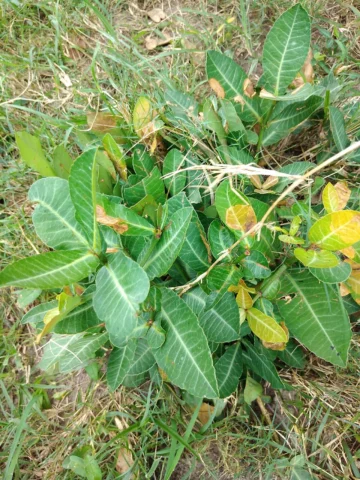

From the Namibian discussions
The species was included in a Namibian growers’ planting wish list. No local growth rate, fruit yield or irrigation result accompanied that request. Sharing a well-labelled record of even one successful or unsuccessful tree would make the next planting decision more useful.
Check the exact plant
Use the full scientific name when ordering. SANBI describes an African species with small orange fruit and a wide climatic range, but it also notes sensitivity to cold. A broad rainfall range in a species description does not prove that a nursery plant can establish on rainfall alone at your site.
Match the microclimate
Look for a warm position with adequate space, shelter from drying winds and soil that drains. Compare it with colder hollows and exposed boundaries on the same property. A sunny wall may provide shelter, but reflected summer heat can increase stress. Measure conditions instead of assuming every sheltered corner is beneficial.
Use one tree as a learning plot
- Ask the nursery about planting-material origin and any fruiting trees grown nearby.
- Prepare animal protection and a realistic water supply before planting.
- Record watering, new growth and leaf damage through the seasons. Check soil moisture rather than watering automatically every day.
- Photograph flowering and fruit development with dates. Record whether fruit sets and ripens, not just whether the tree remains alive.
Keep harvest expectations realistic
Learn the ripe fruit’s appearance from a correctly identified specimen. Avoid advertising future production from a generic growth claim or a picture taken in a different climate. If several households want the species, pool observations from a few suitable sites before ordering a large number of plants. This spreads learning without requiring every household to repeat the same uncertainty.
Namibian climate and microclimate
Warm northern sites may differ greatly from a frosty Windhoek garden. Young plants can be more vulnerable than mature trees, and shelter changes water use as well as temperature. A tree surviving a single mild winter is not yet proof of long-term suitability.
Your first practical step
Compare the coldest parts of your site with a warmer sheltered position and ask a local nursery for evidence of this exact species growing nearby.
Watch and adapt
 Watch videoWatch: Build a Nursery & Grow Trees
Publisher: Community Forests International
Country and context: Exact filming country not confirmed; Swahili with English subtitles.
A general seedling-care lesson, also catalogued by World Agroforestry. It is not a species-specific growing demonstration.
Use the nursery lesson for healthy planting stock and records. It is not evidence that African mangosteen tolerates a particular Namibian winter.
Keep exploring
- Garden weather records: learn what happens at your own site
- Orchard layout: balance sunlight, wind, water and access
- Fruit trees
Sources and further reading
Have you tried this in Namibia? Share the site conditions, method and result—including what did not work—with the Living Earth community. Local observations help the next person adapt the idea.