
White cottony material on citrus deserves a closer look. Cottony cushion scale is one possibility, but identifying the insect and its stage is more useful than repeatedly applying a general spray. This guide helps organise that inspection.

From the Namibian discussions
Namibian growers reported scale on a lemon tree despite repeated neem applications. Other contributors suggested water removal and attention to ants. These are practical observations; the discussion’s blanket explanation of why neem can never work should not be treated as a rule for every formulation, stage or scale species.
Look for the diagnostic feature
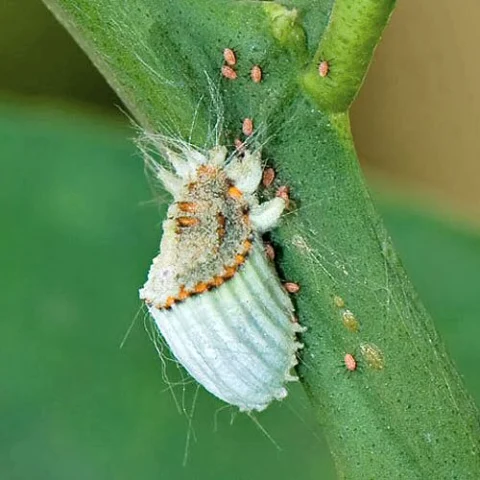
UC IPM describes Icerya purchasi females with a conspicuous fluted white egg sac. Honeydew and sooty mould can accompany an infestation. Take a close photograph and compare with a reliable identification reference. A fluffy white patch alone can also be confused with other insects or debris.
Inspect a few marked branches
- Choose several affected shoots and photograph them with dates.
- Look for ants tending the insects and for predators before intervening.
- On a small reachable area, consider gentle physical removal without injuring bark or stripping foliage.
- Revisit the same shoots to distinguish new live insects from old scales or empty remains.
Protect helpful insects
UC IPM emphasises natural enemies, including vedalia beetles, and warns that disruptive sprays can worsen control. Its Californian biological-control history is not a claim that every named enemy is present on your tree. Do not import or release insects yourself. Avoid broad spraying while you are still establishing what is there.
Use a targeted next step
If live scale continues to increase or the tree declines, seek local pest-identification advice. Follow the label of any locally permitted product, including heat restrictions and crop use. Do not add cayenne, detergents or concentrated oils to a mixture by guesswork. Manage ants using a suitable method that avoids coating or damaging the trunk.
Namibian climate and microclimate
Hot, water-stressed citrus can be sensitive to oil treatments and rough handling. Dense sheltered canopies may have different pest conditions from exposed branches. Keep irrigation and tree stress in the diagnosis.
Your first practical step
Photograph one affected branch, identify the scale if possible, and compare it a week later before repeating a spray.
Watch and adapt
 Watch videoWatch: Beneficial Insects and Natural Enemies
Publisher: University of California IPM
Country and context: USA; California context.
A supporting lesson on beneficial insects; identify the species actually present in your Namibian garden.
The California lesson explains beneficial insects. Use it to improve observation, not to assume the same species or treatment calendar occurs in Namibia.
Keep exploring
- Ants in the garden: follow the trail before treating
- Citrus trees
- Ladybirds (or lady-beetles or ladybugs)
Sources and further reading
Have you tried this in Namibia? Share the site conditions, method and result—including what did not work—with the Living Earth community. Local observations help the next person adapt the idea.