
Core gardening usually describes a bed with an organic layer buried beneath the growing soil. Versions differ, so the useful question is what a particular design changes in your garden.
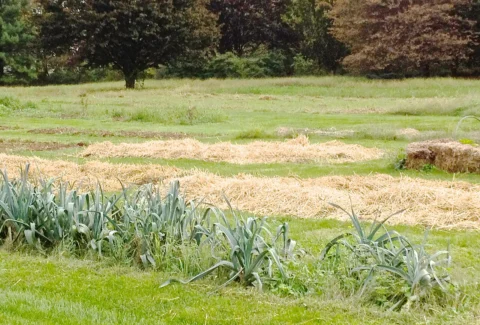
Photo: Final4one · Original image · CC BY-SA 3.0. Wikimedia display-size version; no crop or content edits.

From the Namibian discussions
The idea was saved with the comment “good for arid areas”. No written watering record or local comparison survives in that message. Keep it as a practical idea worth testing; the wiki can become more useful as growers contribute measured local results.
Distinguish related methods
A buried straw core, trench composting and a mound built over logs are not identical systems. The existing Hügelkultur guide covers woody mounds; this article focuses on assessing a proposed core bed and comparing it with simpler soil care.
Choose a fair small trial
- Write down the proposed materials, depth and bed dimensions before construction.
- Set up a small comparison bed with similar soil, crop and exposure.
- Record the water used to wet the buried material as well as later irrigation.
- Observe drainage, settling, root growth and crop performance.
- Keep a record through a dry spell rather than judging only the first green growth.
This is an editorial trial design, not a proven recipe or a prescribed burial depth.
What soil science contributes
Washington State University’s guidance emphasises that roots and decomposers need air as well as water. Its discussion of Hügelkultur also questions sweeping benefits claimed for buried woody material. Neither point proves that every straw-core bed fails; it explains why drainage, oxygen, nutrients and settling deserve attention.
Compare with the simplest useful alternative
Surface mulch and appropriate compost use may achieve your aim with less digging. Record labour, material availability and harvest as well as litres of water. Imported organic material, repeated rebuilding or extra nutrients may change the result.
Namibian conditions and microclimate
An exposed raised bed can behave differently from a bed sheltered from wind or partly sunken in sandy ground. Check that the comparison receives similar sunlight. Organic material may also interact with local termites; observe the actual result rather than assuming their activity is always harmful.
Try it locally and share what happens
Test one small bed, leaving most food production in a familiar system. Share both successes and failures, including water used during construction and the length of the trial.
Watch, understand, adapt
Post Summer Prep and Plant
Country and context: Australia — Perth, Western Australia, ABC Gardening Australia.
A conventional bed-preparation example to help frame a comparison. It is not a core-gardening demonstration.
Apply it locally: Use its planning questions, not its calendar or amendments. Compare methods under your own water and soil constraints.
Keep exploring
Hügelkultur · Mulch · Wicking beds