
Albizia is a group of trees, not a single interchangeable source of shade, biomass or fodder. A useful planting decision begins with the scientific name, available space and the role the tree will play around people and livestock.
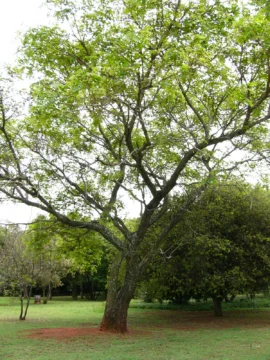

From the Namibian discussions
Namibian growers suggested Albizia versicolor for shade and supporting vegetation, and A. anthelmintica as a smaller or slower alternative. Another message expressed interest in trying A. lebbeck. These are distinct local suggestions; a recommendation for one species should not be copied to all three.
An important livestock distinction
SANBI describes A. versicolor as a medium to large tree with a spreading crown and explicitly warns that its pods and seeds are poisonous to livestock, particularly young pods. “Useful agroforestry tree” therefore does not mean “safe feed tree”. Keep livestock access in the design and obtain species-specific advice.
Ask a nursery the right questions
- Request a labelled plant and the source of its seed or propagation material. Check that the label uses a complete species name.
- Ask for examples growing near your climate and note how much supplementary water they receive.
- Allow for the adult crown and roots, not only the size of a nursery bag. Mark paths, buildings, tanks and overhead lines.
- Check suitability and any restrictions on introduced species before distributing seed or planting near natural areas.
Design shade as a changing resource
Shade can protect people and some crops but also reduce vegetable light and compete for water. Photograph the planting area at morning, midday and afternoon. Decide how you will observe the tree’s effect as it grows and whether you have room to manage it without repeated severe cutting.
Keep biomass claims measurable
If a planting is intended to supply prunings, record how much material it produces and how it recovers. Do not infer a complete fertiliser or livestock ration from membership of the legume family. Discuss intended mulch or feed use for the actual species, and keep uncertain material away from animals.
Namibian climate and microclimate
Warm northeastern sites, frosty inland gardens and coastal wind present different tests. A tree described as fast-growing in a wet season may need substantial establishment water in your yard.
Your first practical step
Before buying, write the exact species name next to its planned job and mark the mature growing space. Compare it with locally established alternatives.
Watch and adapt
 Watch videoWatch: Build a Nursery & Grow Trees
Publisher: Community Forests International
Country and context: Exact filming country not confirmed; Swahili with English subtitles.
A general seedling-care lesson, also catalogued by World Agroforestry. It is not a species-specific growing demonstration.
Use the nursery workflow, while keeping species labels and seed lots separate. The film is not evidence that every Albizia suits dryland fodder production.
Keep exploring
- Food Forest
- Coppicing and Pollarding
- Poisonous veld plants and hay: identify the plant before feeding
Sources and further reading
Have you tried this in Namibia? Share the site conditions, method and result—including what did not work—with the Living Earth community. Local observations help the next person adapt the idea.