
Asparagus (Asparagus officinalis) is a perennial vegetable grown for its young shoots. A bed can produce for many years, but establishment takes patience. It is most suitable where you can reserve space and continue caring for the plants beyond the short harvest period.
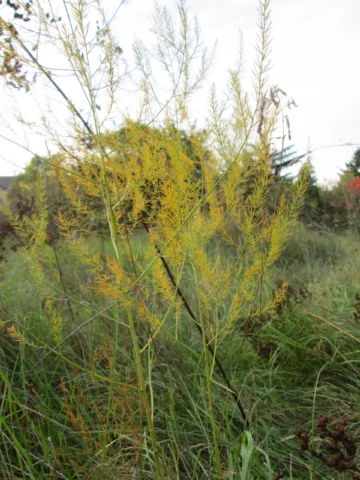
Photo: AnRo0002 · Original photograph · CC0 1.0. Unchanged; displayed at reduced size.

Where it fits
A household or community with secure access to a garden can consider a small permanent bed. If you need food quickly, keep annual vegetables in production while the asparagus establishes. Before buying plants, ask a local grower or nursery which cultivar has performed in your area and how its growth and resting periods behave there.
What you need
- Correctly labelled vegetable asparagus crowns or seedlings.
- A sunny, well-drained permanent bed, cleared of persistent weeds.
- Water for establishment and continued fern growth.
- Space for mature foliage and access for weeding and harvesting.
Check the botanical name when buying: a decorative plant sold as an “asparagus fern” is not a substitute for vegetable asparagus.
Establish it carefully
Prepare the bed before planting and check its soil condition. Planting methods differ for dormant bare-root crowns and seedlings: follow directions for the actual stock supplied. Minnesota Extension describes crown planting and recommends soil testing before adding fertiliser. Its cold-climate calendar should not be transferred directly to Namibia. Read the crown-establishment guidance.
- Mark the permanent bed and paths. Leave enough room to reach plants without compacting their root area.
- Ask the supplier to specify the cultivar, planting depth and spacing for the stock you receive.
- Water after planting and check moisture beneath the surface as roots establish.
- Remove competing weeds carefully and keep a record of plant survival.
Harvest and recovery
A new planting must build strong roots before it supports regular harvests. ABC’s seed-grown example is left unharvested for the first three years. Once an established bed is harvested, later shoots must be allowed to develop into ferny foliage that replenishes the plant. Do not remove healthy green fern simply to keep the bed tidy. ABC explains the harvest-and-recovery cycle.
Water and microclimate in Namibia
Budget for the whole growing period, including fern growth after harvest. Compare the bed’s exposure to hot reflected sunlight, drying winds and frost with nearby successful gardens. Shelter should preserve sufficient sunlight and room for foliage. Keep notes on when shoots emerge and when plants naturally die back; overseas months cannot establish your local calendar.
Common mistakes
The biggest planning mistake is treating asparagus as a quick crop for a temporary patch. Another is taking every shoot from a young plant. If growth remains weak, pause harvesting and investigate water, drainage, weeds and plant health rather than adding fertiliser without a diagnosis.
Try this today
Mark a possible bed and write down who will water it during holidays or a dry spell. If that commitment is realistic, source a few locally suitable plants and learn from them before enlarging the planting.
Watch, understand, adapt
Cheers for Spears
Source and location: ABC Gardening Australia, presented by Millie Ross. Filmed on Taungurung Country, Central Victoria, Australia.
A 4 minute 26 second demonstration covering bed preparation, crowns, seedlings and the importance of allowing fern growth.
▶ Watch at the original source
Adapt for Namibia: Central Victoria has a different seasonal pattern from Namibia’s coast, northern summer-rainfall areas and inland frost pockets. Learn the plant’s growth cycle; confirm planting time and stock-specific planting instructions locally. Do not copy a fertiliser recipe without considering your soil.
Keep exploring
Soil · Mulch · Drip irrigation