
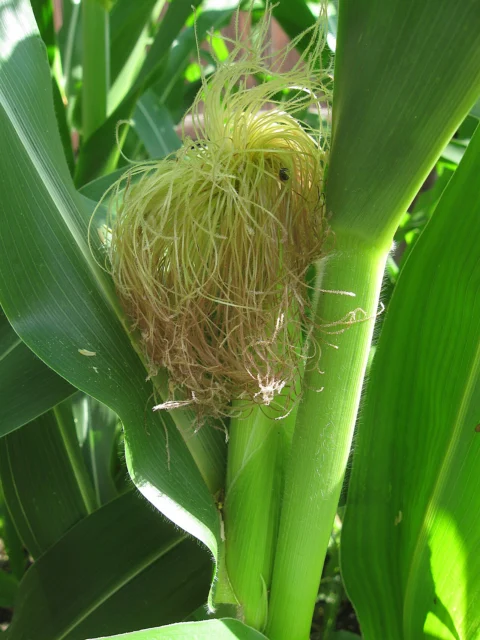
Missing kernels can result from poor pollination or failure of developing kernels after pollination. Understanding tassels and silks helps a grower distinguish a planting-layout problem from heat, water stress or damage.

From the Namibian discussions
Namibian contributors explained that tassels release pollen and each silk connects with a potential kernel. They suggested sparse planting and birds eating tassels or silks as possible causes. Those are useful things to inspect, but the saved conversation did not diagnose the particular plants.
Observe the flowering window
University of Minnesota agronomy guidance explains that stress can disrupt the overlap between pollen shed and silk emergence and can also affect kernel set. Look at the whole crop while it flowers, not only at a poor cob weeks later.
Use a compact planting where practical
For a small garden, several short neighbouring rows generally give pollen more opportunity to reach silks than one isolated long row. Keep crop-appropriate spacing and avoid crowding plants so tightly that water and nutrients become limiting. If only a few plants fit, recognise the limits before expecting full cobs.
Keep a flowering record
- Note when tassels begin shedding pollen and when silks appear.
- Check for feeding damage without assuming all birds seen nearby are responsible.
- Record irrigation interruptions, hot spells and wind during this period.
- Compare the pattern of missing kernels across several cobs at harvest.
Change one likely cause next time
If layout was sparse, try a compact block. If water supply failed, first ensure that the chosen crop area can be supported. Avoid adding a general fertiliser dose merely because kernels are missing. A few observations can distinguish a likely cause and make the next planting more informative.
Namibian climate and microclimate
Hot, dry air and interrupted watering can affect flowering in an irrigated Namibian garden. An overseas month-by-month schedule is less useful than observing the plant’s actual stage. Wind helps move pollen but strong drying conditions can add stress.
Your first practical step
Mark the flowering dates of one maize planting and keep a short irrigation and damage record to compare with the harvested cobs.
Watch and adapt
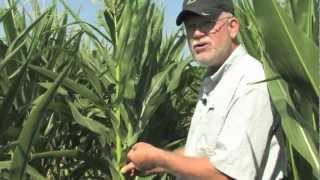 Watch videoWatch: Ear Shake Test to Determine Corn Pollination Progress
Publisher: Purdue Extension
Country and context: USA; west-central Indiana, according to Purdue’s accompanying publication.
A field demonstration of checking pollination. A successful pollination check does not guarantee that kernels will survive later stress.
The lesson illustrates maize reproduction. Use local growth stages and weather rather than the presenter’s seasonal dates.
Keep exploring
- Mielies/Maize
- Protect mahangu and other grain without clearing useful trees
- Garden weather records: learn what happens at your own site
Sources and further reading
Have you tried this in Namibia? Share the site conditions, method and result—including what did not work—with the Living Earth community. Local observations help the next person adapt the idea.