
Mongongo, also called manketti, is Schinziophyton rautanenii. Its fruit and kernels have longstanding food value in parts of southern Africa. Growing it is a long-term landscape decision, especially where deep sandy soils and a warm summer-rainfall climate resemble its natural setting.
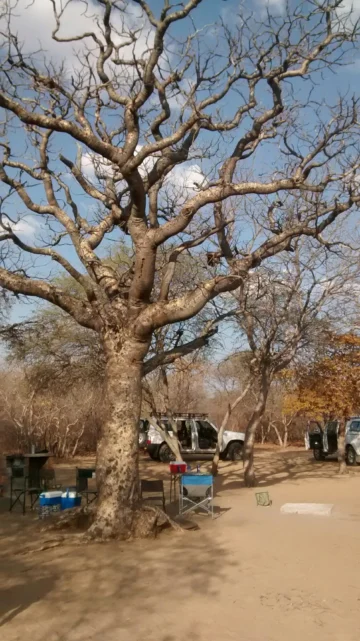

From the Namibian discussions
The species was on the Namibian growers’ planting wish list. That interest should be connected with the knowledge of people who already gather and use it. The saved request does not provide evidence of successful cultivation on a cold or compacted urban site.
Consider the whole tree
SANBI describes a substantial tree associated with deep Kalahari sands and summer rainfall. Male and female flowers occur on separate trees, which matters if fruit is the aim. One unsexed seedling is not a guaranteed future harvest. Ask the nursery what is known about its planting material rather than assuming all plants will bear.
Match the ground and the commitment
Check soil depth, drainage and space for a mature crown. A small planting pit in compacted ground does not recreate a deep sandy landscape. Establish who will maintain and protect the tree over time, particularly on shared land. Agree access and ownership of future harvests before investing in a community planting.
Document a manageable trial
- Record seed or seedling origin and obtain material through an appropriate, permitted source.
- Ask for a species-specific propagation method; do not improvise chemical or heat treatments from unrelated trees.
- Protect seedlings from browsing and check moisture as roots establish.
- Record survival through winter, annual growth, flowering and any fruit. Retain records even if the trial shows the site is unsuitable.
Respect harvesting knowledge
Learn established fruit and kernel handling from experienced local users rather than assuming all seeds can be eaten or processed in the same way. If considering a business, measure the work involved in collection, shelling, handling and storage before predicting income. Leave regeneration and existing community access in the plan. A commercial proposal should not displace people who already depend on the resource.
Namibian climate and microclimate
Young trees can be vulnerable to cold even where mature specimens tolerate some light frost. Deep sand, seasonal moisture and summer warmth are important context; shelter alone cannot compensate for unsuitable soil or repeated severe cold.
Your first practical step
Compare your site with a known local manketti stand and speak with both a nursery and experienced harvesters before ordering trees.
Watch and adapt
 Watch videoWatch: Build a Nursery & Grow Trees
Publisher: Community Forests International
Country and context: Exact filming country not confirmed; Swahili with English subtitles.
A general seedling-care lesson, also catalogued by World Agroforestry. It is not a species-specific growing demonstration.
The general nursery workflow is useful, but manketti’s seed treatment, separate sexes and long establishment period need species-specific planning.
Keep exploring
- Shared garden land: agree access and responsibilities before planting
- Fruit trees
- Trees – Start here
Sources and further reading
Have you tried this in Namibia? Share the site conditions, method and result—including what did not work—with the Living Earth community. Local observations help the next person adapt the idea.