
Biodynamic farming combines a whole-farm approach with distinctive preparations and a spiritual understanding of agriculture. It is worth understanding on its own terms while keeping practical observations, philosophical beliefs and evidence for particular effects clearly distinguishable.
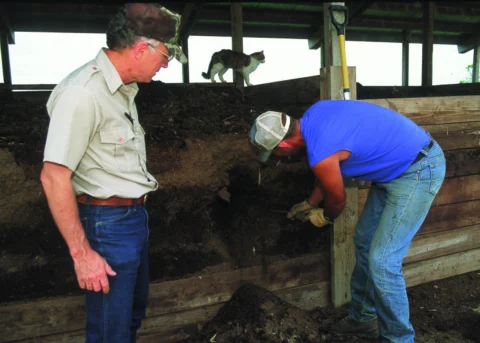
(NRCS_Photo_Gallery).jpg)
From the Namibian discussions
The Namibian collection included What Is Biodynamics?, drawing on Rudolf Steiner’s lectures with an introduction by Hugh Courtney. The saved book expresses interest in the approach; it does not document a Namibian trial. Local growers can contribute useful experience by describing exactly which practices they used and under what conditions.
Understand the whole-farm idea
Biodynamic practitioners describe the farm as an interconnected living system. Attention to soil, compost, crops, animals and the surrounding landscape is central to the approach. Many practical activities overlap with other organic and ecological farming methods, while preparations and cosmic rhythms distinguish the tradition.
A small urban garden cannot reproduce every relationship of a mixed farm. Translate the useful planning questions to its scale: where fertility comes from, how water is used, which plants support the household and what happens to organic residues. Do not assume animals must be added simply to make a garden fit a model.
Know what is distinctive
The tradition includes specially prepared materials used in compost and field sprays, alongside ideas about seasonal and celestial influences. Practitioner accounts explain these within biodynamic philosophy. Describing that philosophy accurately is different from establishing each proposed mechanism scientifically.
Read instructions in their original context and distinguish preparation-making from ordinary composting. A product sold with a biodynamic description still needs clear information about contents, handling and intended use. Do not infer food safety or veterinary benefits from the label.
Ask what a comparison actually tests
If one farm uses compost, cover crops, careful irrigation and preparations while another lacks all four, a difference in yield cannot be assigned to the preparations alone. Equally, one failed garden does not settle every question about a whole farming system. State the specific question before deciding what evidence would answer it.
Useful questions might be whether a particular compost-management practice reduces losses, or whether an additional preparation changes results when the rest of the management is similar. Keep practical observations separate from conclusions about an unseen mechanism. A result can be worth sharing without claiming to explain everything.
Make a modest, fair local trial
- Choose one practice and define the outcome you care about.
- Use comparable plots or compost batches, with the same ordinary care.
- Record dates, water, materials, labour and costs in NAD.
- Keep a comparison without the additional practice and repeat where feasible.
Decide in advance when and how to measure the result. Harvest usable mass, plant survival or the effort required may matter more to a household than a photograph of vigorous leaves. Note failures, unusual weather and management differences that limit interpretation.
Keep the useful habits and review the extras
Careful observation, thoughtful compost use and planning the farm as a connected system can be discussed independently of whether a grower shares the spiritual framework. Respect practitioners’ experience without presenting every claim as proven, and allow sceptical questions without dismissing the person.
For a resource-limited garden, protect the essentials first: suitable crops, seed, water, soil care and timely work. Evaluate additional materials by what they contribute under local conditions. Share the method and result with the community so others can adapt or repeat the comparison.
Namibian climate and microclimate
European seasonal traditions should not be copied directly into a Namibian planting calendar. Rainfall, frost, heat and available irrigation determine practical growing windows. A sheltered irrigated garden and an extensive dryland farm also have different resources for maintaining cover and producing compost.
Your first practical step
Choose one clearly described practice that fits your resources, keep ordinary management consistent and record a comparison over a complete growing cycle.
Watch and adapt
Watch: Coming to Ground: Biodynamic Farmers
Publisher: Media Working Group; linked by the Biodynamic Association
Country and context: USA; Foxhollow Farm, Kentucky, practitioner context.
The page includes the film featuring Janey Newton and Laura Riccardi Lyvers. It explains practice and belief from the practitioners’ perspective.
The linked films present practitioners’ explanations through the Biodynamic Association. They help explain the tradition; they are not independent proof of each claimed effect or a Namibian planting calendar.
Keep exploring
Sources and further reading
- Biodynamic Association: principles and practices—practitioner account
- Biodynamic Association: preparations and practitioner films
- University of Minnesota: designing on-farm comparisons
Have you tried this in Namibia? Share the site conditions, method and result—including what did not work—with the Living Earth community. Local observations help the next person adapt the idea.