
Chinese jujube is worth investigating where heat and water limits make fruit growing difficult. Choose the species and variety carefully, then measure how it performs in your own garden.
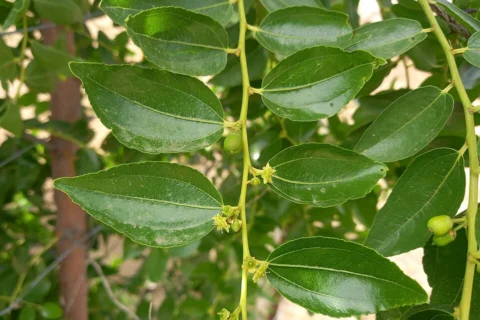

Check the name before buying
This guide is about Ziziphus jujuba, Chinese jujube or Chinese date. It is not a date palm. It is also different from Indian jujube, Ziziphus mauritiana. A common name on its own is not enough to choose a tree.
- Find a nursery that can name the species and cultivar.
- Ask whether the tree is grafted, and which part must stay above the soil.
- Ask about pollination and local fruiting experience for that cultivar.
- Choose space for the mature tree and access for picking.
- Keep a small record of watering, flowering, harvest and any root suckers.
What the dry-climate evidence means
New Mexico State University has studied Chinese jujube in a dry part of the United States. Its guide describes heat tolerance, differences between cultivars and better production with irrigation. That makes it a useful comparison for Namibia, not a local performance guarantee. Read the NMSU introduction.
Some varieties can set fruit alone, while cross-pollination benefits others. Ask about the actual cultivar instead of buying two random trees. Seed-grown trees may not give the fruit quality of a named cultivar. For a first household tree, a correctly labelled nursery plant is often easier to evaluate than a grafting experiment.
Keep your first trial small. A claim about drought survival says little about harvest size, fruit quality or how a young tree establishes. Compare the cost of water and care with the fruit your household will use.
Check heat, winter and water together
Namibian gardens vary in winter cold, summer heat, wind and soil. New Mexico also has regional differences and can have colder winters than many Namibian locations. Do not copy its planting or pruning months directly.
A wall may shelter a tree but also reflect heat. Sandy soil can drain quickly; a compacted planting site can hold water around roots. Check the planting area after watering. Keep mulch clear of the trunk and protect the young tree from animals. Increase the watered root area as the tree grows rather than keeping a tiny wet spot at its stem.
What to watch for
- New shoots away from the trunk: check for root suckers and manage them before a small planting becomes difficult to control.
- Plenty of growth but poor fruit: check variety identity, flowering, pollination and watering records.
- Young tree struggling: inspect the root zone and planting depth; drought tolerance of an established tree does not describe a newly planted one.
- Fruit does not meet expectations: note the stage at which it was picked and the cultivar. Compare with fruit from the supplying nursery.
Wear gloves when handling thorny growth. Place the tree where harvesting and maintenance will not block a narrow path used by children or neighbours.
Turn one tree into useful local knowledge
Photograph the label and the tree at planting. At harvest, note what the household liked fresh and what was useful for processing. Keep simple notes through at least a full growing cycle and continue recording later crops. A first crop is a beginning, not a stable yield forecast.
The original Living Earth fruit list named jujube as an option. This guide expands that listing; it does not claim that group members have already verified a particular variety throughout Namibia. Local growers’ observations can help fill that gap.
Watch and adapt
 Watch videoWatch: jujube grafting — New Mexico State University
United States. This is an advanced propagation demonstration, not a requirement for planting your first tree. Match scion, rootstock and growth stage; do not copy northern-hemisphere dates. Read the university’s companion guide.
Keep exploring
Sources and further reading
Have you grown this in Namibia? Share your region, soil, water, tree age and result with the Living Earth community. A short local observation is useful even without a scientific trial. Tell readers what you saw, and encourage them to try a small test in their own conditions.