
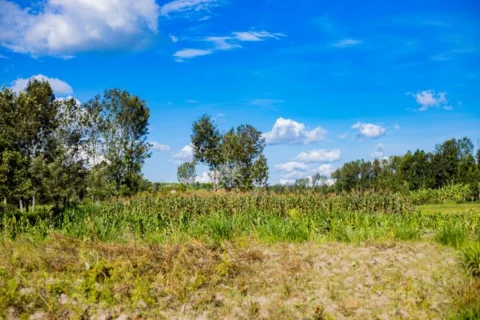
Agroecology is an approach to farming that works with nature instead of against it. Rather than relying heavily on synthetic fertilisers, pesticides and large amounts of fuel, agroecology uses natural processes to grow healthy crops, raise healthy animals and restore the environment. It combines modern science with traditional farming knowledge, helping farmers produce food while improving the land for future generations.
For Africa, agroecology is especially important. Most farms on the continent are small family farms, and many already use a mixture of crops, livestock and trees. However, these farmers also face serious challenges such as declining soil fertility, expensive fertilisers, changing rainfall patterns and increasing temperatures. Agroecology provides practical, affordable solutions that build on local knowledge instead of replacing it.
Unlike some farming systems that focus only on producing the highest possible yield from a single crop, agroecology looks at the whole farm as one living system. Healthy soils, insects, birds, trees, livestock, water and people all work together. A healthy ecosystem produces healthier crops, requires fewer external inputs and is more resilient during droughts, floods and pest outbreaks.
The Food and Agriculture Organization of the United Nations (FAO) describes agroecology as one of the key approaches for creating sustainable food systems that can feed growing populations while protecting nature.
https://www.fao.org/agroecology
Why Africa Needs Agroecology
Africa’s population is expected to nearly double by 2050. At the same time, many farmers are experiencing:
- Poor and degraded soils
- Less reliable rainfall
- More frequent droughts
- Higher fertiliser prices
- Loss of biodiversity
- Increasing food insecurity
Many conventional farming methods depend heavily on imported fertilisers, pesticides and improved seed. These inputs can increase production in the short term but are often expensive and may become difficult to obtain during economic crises or supply shortages.
Agroecology helps farmers become more self-reliant. Instead of buying fertility in bags, they create it naturally through composting, crop rotation, nitrogen-fixing plants, mulching and livestock manure. Instead of depending entirely on pesticides, they encourage beneficial insects, birds and healthy ecosystems to keep pests under control.
This reduces production costs while improving the long-term health of the farm.
The Principles of Agroecology
Although agroecology includes many different farming techniques, they are all based on a few simple principles.
Healthy Soils
Healthy soil is full of life. Billions of bacteria, fungi, earthworms and other organisms break down organic matter and make nutrients available to plants.
Farmers improve soil health by:
- Adding compost
- Using animal manure
- Growing cover crops
- Leaving crop residues on the soil
- Reducing unnecessary ploughing
- Keeping the soil covered with mulch
Healthy soils store much more water and are less likely to erode during heavy rains.
Diversity
Nature is diverse. Healthy forests rarely contain only one species of tree.
Agroecology follows the same idea by encouraging:
- Mixed cropping
- Crop rotation
- Agroforestry
- Livestock integration
- Diverse pasture species
Growing different crops together reduces the risk of total crop failure and provides farmers with a wider variety of food and income.
Recycling Resources
Nature wastes nothing.
Leaves become compost.
Animal manure becomes fertiliser.
Pruned branches become mulch.
Kitchen waste becomes compost.
Instead of throwing valuable materials away, agroecology keeps nutrients cycling within the farm.
Water Conservation
Water is becoming one of Africa’s most valuable resources.
Agroecological farms use many techniques to capture and store rainfall, including:
- Mulching
- Swales
- Contour planting
- Farm ponds
- Agroforestry
- Increasing soil organic matter
Healthy soils can hold several times more water than degraded soils, helping crops survive dry periods.
Working with Nature
Instead of fighting nature, agroecology encourages natural ecosystems to perform much of the work.
Birds eat insects.
Bees pollinate crops.
Trees provide shade.
Earthworms improve soil structure.
Microorganisms recycle nutrients.
Every living organism has a role to play.
Proven Results Across Africa
Agroecology is not just a theory. It has already transformed farming across many African countries.
Niger
Millions of trees have returned to farmland through Farmer Managed Natural Regeneration (FMNR). Farmers simply protected and managed naturally growing tree stumps instead of clearing them. The result has been improved soil fertility, reduced wind erosion and increased crop production.
Learn more:
Burkina Faso
Farmers revived the traditional zaï pit system.
Small planting pits collect rainfall and organic matter around crops. Land that was once considered useless now produces good harvests even in dry years.
Kenya
Many farmers have integrated nitrogen-fixing trees into their fields. These trees naturally improve soil fertility while providing fuelwood, livestock fodder and shade.
World Agroforestry (CIFOR-ICRAF) has documented many successful examples.
Ethiopia
Large-scale watershed restoration projects have restored degraded hillsides through tree planting, soil conservation and improved grazing management.
Groundwater levels have increased, vegetation has returned and agricultural productivity has improved.
Malawi
Many farmers grow crops under Faidherbia albida, a remarkable tree that drops its leaves during the rainy season. This allows sunlight to reach crops while providing natural fertiliser through leaf litter.
Agroforestry – One of Africa’s Greatest Opportunities
One of the most successful forms of agroecology is agroforestry.
Agroforestry combines trees with crops and livestock on the same piece of land.
Trees provide:
- Fruit
- Nuts
- Timber
- Firewood
- Livestock fodder
- Shade
- Wind protection
- Soil improvement
- Carbon storage
- Habitat for wildlife
Properly designed agroforestry systems often become more productive over time rather than less productive.
If you would like to learn more about agroforestry, visit:
Is Agroecology Productive?
One of the biggest questions people ask is whether agroecology can feed Africa.
The answer is that it depends on what we measure.
If we only compare one crop over one season, conventional farming may sometimes produce higher yields, especially where large amounts of fertiliser are used.
However, agroecology measures success differently.
It considers:
- Total food production
- Farm profitability
- Soil health
- Water use
- Biodiversity
- Nutrition
- Climate resilience
- Long-term productivity
Many agroecological farms produce slightly lower yields of one crop but much higher overall production because they also produce fruit, vegetables, eggs, livestock, timber, fuelwood and medicinal plants.
At the same time, production costs are often much lower because farmers buy fewer external inputs.
Agroecology and Climate Change
Climate change is making farming more difficult across Africa.
Longer droughts, more intense storms and unpredictable rainfall increase the risk for farmers.
Agroecological systems are generally more resilient because they include:
- Healthy soils
- Trees
- Diverse crops
- Better water storage
- Greater biodiversity
When one crop fails, another may still succeed.
Healthy soils also store more carbon, helping reduce greenhouse gas emissions.
Getting Started
Farmers do not need to change everything overnight.
Many successful agroecological farms started with only one or two changes.
Good first steps include:
- Making compost
- Mulching around crops
- Planting nitrogen-fixing trees
- Rotating crops
- Keeping the soil covered
- Harvesting rainwater
- Reducing unnecessary tillage
- Planting flowering plants for pollinators
Every improvement helps build a healthier farming system.
Worthwhile Videos
Agroecology in Africa

World Agroforestry (CIFOR-ICRAF) YouTube Channel
https://www.youtube.com/@WorldAgroforestry
Food and Agriculture Organization (FAO) YouTube Channel
Worthwhile Websites
Food and Agriculture Organization (FAO) – Agroecology Knowledge Hub
https://www.fao.org/agroecology
World Agroforestry (CIFOR-ICRAF)
Alliance for Food Sovereignty in Africa (AFSA)
Biovision Africa Trust
Participatory Ecological Land Use Management (PELUM Africa)
Sustainable Agriculture Tanzania (SAT)
African Centre for Biodiversity
FAO eLearning Academy
Learn More: Going Deeper
If you have read this far, you may be wondering whether this approach is simply another farming trend. It is not. While the name is relatively new, many of the ideas have been used successfully for thousands of years. What has changed is that scientists now better understand why these natural systems work and can combine traditional knowledge with modern research.
The Science Behind Healthy Soils
One of the biggest discoveries of the past few decades is that soil is alive.
For many years, scientists thought of soil mainly as a mixture of sand, clay and nutrients. Today we know that healthy soil contains an entire underground ecosystem. A single teaspoon of fertile soil can contain billions of bacteria, kilometres of fungal threads, thousands of tiny animals and millions of other microorganisms.
Together they perform work that would otherwise cost farmers a great deal of money.
They:
- Break down dead plants into nutrients.
- Help roots absorb water.
- Release minerals that plants cannot access on their own.
- Protect plants from diseases.
- Improve soil structure.
- Store carbon from the atmosphere.
The healthier this underground community becomes, the healthier the crops above it become.
Beyond Sustainability
Many people speak about sustainable agriculture, meaning agriculture that can continue without damaging the environment.
Some farmers argue that we should aim even higher.
Instead of simply sustaining what remains, we should restore what has already been lost.
This is where ideas such as regenerative agriculture, holistic grazing, syntropic agroforestry and ecosystem restoration overlap with agroecology. Although each has its own focus, they all aim to rebuild healthy ecosystems while producing food.
Why Trees Matter
Many farming systems removed trees to make room for crops.
Today we are learning that trees are often one of a farm’s greatest assets.
Trees:
- Reduce wind speed.
- Provide shade for livestock.
- Bring nutrients up from deep underground.
- Feed soil organisms through their roots.
- Reduce erosion.
- Increase rainfall infiltration.
- Provide fruit, timber, medicine and firewood.
- Support birds and beneficial insects.
In many parts of Africa, simply allowing native trees to regrow naturally has transformed degraded farmland.
Farming as an Ecosystem
A healthy farm behaves much like a natural ecosystem.
Think about a forest.
Nobody applies fertiliser.
Nobody sprays pesticides.
Nobody irrigates every week.
Yet forests continue growing year after year.
Why?
Because nutrients constantly cycle through the system.
Leaves fall.
Animals leave manure.
Dead wood decomposes.
Rainwater soaks into the soil.
Trees pump nutrients from deep underground.
Microorganisms recycle everything.
Natural ecosystems have been solving farming problems for millions of years. Farmers can often achieve better results by copying these natural processes rather than constantly trying to replace them with purchased products.
Working With Nature Instead of Fighting It
Many agricultural problems are actually symptoms of an unhealthy farming system.
For example:
If insects attack crops every year, the first question should not always be:
“Which pesticide should I buy?”
Instead, ask:
- Why are these insects becoming a problem?
- What natural predators have disappeared?
- Is the soil healthy?
- Are the plants receiving balanced nutrition?
- Is there enough diversity on the farm?
Healthy ecosystems naturally regulate many pests and diseases before they become serious.
The Economics
One reason many farmers become interested in this approach has little to do with the environment.
It makes business sense.
Many farms are caught in an expensive cycle:
- Buy fertiliser.
- Buy pesticides.
- Buy herbicides.
- Buy improved seed.
- Borrow money.
- Hope prices remain high.
If fertiliser prices double or crop prices fall, profits disappear.
By producing more fertility on the farm itself, farmers become less vulnerable to global price fluctuations.
The goal is not necessarily to eliminate all purchased inputs overnight, but to reduce dependence on them over time.
Can Large Farms Use These Ideas?
Yes.
Although many examples come from smallholder farmers, larger commercial farms are increasingly adopting similar principles.
These include:
- Cover crops between cash crops.
- Reduced tillage.
- Precision grazing.
- Compost applications.
- Shelterbelts.
- Mixed livestock systems.
- Biological pest management.
- Agroforestry.
Many large farms now recognise that healthier soils improve profitability over the long term.
New Technology Still Has a Place
Working with nature does not mean rejecting technology.
Modern innovations can make farming even more effective.
Examples include:
- Drones for monitoring crops.
- Soil moisture sensors.
- Satellite imagery.
- Weather forecasting.
- Solar-powered irrigation.
- Electric fencing for rotational grazing.
- Artificial intelligence for farm planning.
The question is not whether technology should be used.
The question is whether technology supports healthy ecosystems or replaces them.
The best farming systems often combine the wisdom of nature with the best modern tools.
A Different Way of Measuring Success
Traditionally, farming success has often been measured by yield per hectare.
But imagine two farms producing exactly the same amount of maize.
The first farm spends large amounts on fertiliser, chemicals and irrigation.
The second farm spends far less because healthy soils provide many of these services naturally.
Which farmer is actually more successful?
Many researchers now believe agriculture should also measure:
- Profit.
- Soil health.
- Water quality.
- Biodiversity.
- Carbon storage.
- Nutrition.
- Farmer wellbeing.
- Community resilience.
These broader measures give a much better picture of whether farming is truly improving people’s lives.
Africa Can Lead the World
Africa does not need to copy every farming model developed elsewhere.
Many African farmers already possess generations of knowledge about mixed farming, livestock management, water harvesting and local crops.
Combined with modern ecological science, this knowledge gives Africa an opportunity to become a global leader in regenerative food production.
Instead of repeating mistakes made elsewhere, the continent can build farming systems that restore rivers, rebuild soils, protect biodiversity and produce healthy food at the same time.
As climate change and rising input costs affect agriculture worldwide, many countries are beginning to look towards Africa’s experience for solutions.
Recommended Books
Agroecology: The Ecology of Sustainable Food Systems
Stephen R. Gliessman
Agroecology and the Search for a Truly Sustainable Agriculture
Miguel Altieri
https://agroeco.org/publication/agroecology-the-science-of-sustainable-agriculture
Agroecology: The Bold Future of Farming in Africa
https://www.fao.org/family-farming/detail/en/c/853551
The One-Straw Revolution
Masanobu Fukuoka
https://www.goodreads.com/book/show/976905.The_One_Straw_Revolution
Restoration Agriculture
Mark Shepard
https://www.forestag.com/pages/restoration-agriculture
See Also
- Agroforestry
- Permaculture
- Organic Farming
- Regenerative Agriculture
- Holistic Grazing
- Biochar
- Composting
- Water Harvesting
- Soil Health
- Farmer Managed Natural Regeneration (FMNR)
- Syntropic Agroforestry
- Circular Economy
References
- Food and Agriculture Organization of the United Nations. Agroecology Knowledge Hub. https://www.fao.org/agroecology/
- Food and Agriculture Organization of the United Nations. Agroecology: The Bold Future of Farming in Africa. https://www.fao.org/family-farming/detail/en/c/853551/
- World Agroforestry (CIFOR-ICRAF). https://www.cifor-icraf.org/
- Alliance for Food Sovereignty in Africa. https://afsafrica.org/
- Biovision Africa Trust. https://biovisionafricatrust.org/
- Participatory Ecological Land Use Management (PELUM Africa). https://pelumafrica.org/
- Gliessman, S. R. Agroecology: The Ecology of Sustainable Food Systems.
- Altieri, M. A. Agroecology and the Search for a Truly Sustainable Agriculture.
- Reuters. Debate rages over push for new green revolution in Africa’s agriculture. https://www.reuters.com/sustainability/land-use-biodiversity/debate-rages-over-push-new-green-revolution-africas-agriculture-2024-09-25/
This article provides a practical introduction to agroecology for farmers, students, community leaders and anyone interested in building healthier, more productive and more resilient farming systems across Africa. It is only the beginning—agroecology is a broad and exciting field with many specialised topics to explore.