
A fruit-tree guild is a planned group of plants around a central tree. The aim is to combine useful functions, such as food, ground cover and habitat. In an arid garden, every additional plant must also earn its share of water and space.

From the Namibian discussions
A fruit-tree-guild article was shared in the Namibian collection. Its overseas plant list is an inspiration, not a tested Namibian combination. Start with the functions you need and choose locally suitable plants rather than copying the list item for item.
Protect the tree’s establishment
Identify the tree’s likely mature size, irrigation area and access needs. Keep its trunk and immediate care area visible. A young tree struggling to establish may benefit more from mulch and reliable watering than from dense new planting around its roots.
Add one useful function
- Choose one priority, such as a manageable flowering edge or harvestable ground cover.
- Check the proposed plant’s size, season, water need and invasive potential.
- Plant a small section and retain a comparable area without it.
- Record tree growth, irrigation, useful harvest and maintenance.
Measure the trade-offs
The shared Tenth Acre Farm article emphasises observing and adapting guilds. Apply that principle while treating claimed pest-repellent or fertilising effects as things to examine. A plant can attract insects yet compete strongly for moisture. More species do not automatically mean lower labour or a healthier fruit tree.
Change the arrangement over time
The tree’s shade expands as it grows. Plants that suited the first sunny year may later struggle or become difficult to reach. Keep harvest paths open, remove unwanted spread and revise the irrigation layout. Write down why a plant was kept or removed so the design becomes useful local experience.
Namibian climate and microclimate
A guild beneath an irrigated citrus tree in a sheltered courtyard differs from one beneath a rain-fed tree on a farm. Namibia’s dry spells make competition especially visible. Prefer a smaller functioning group to a crowded design that depends on water you cannot reliably supply.
Your first practical step
Choose one companion function and test it on part of the tree’s surrounding area for a season.
Watch and adapt
Publisher: ABC Gardening Australia
Country and context: Australia; exact filming locality not confirmed.
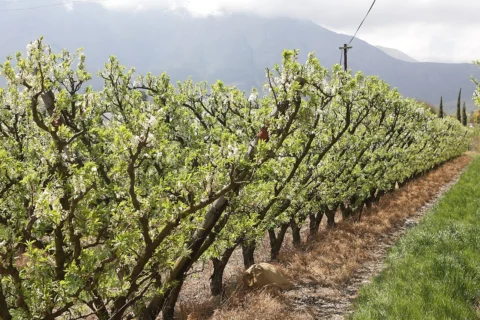
A layout lesson. Choose locally suitable species and examine sun, wind and water before copying rows or spacing.
The orchard lesson supports spacing and access decisions. Add underplanting only after considering your own water supply and mature tree size.
Keep exploring
- Companion planting
- Biomass between fruit trees: test the benefit and competition
- Watering Fruit trees
Sources and further reading
Have you tried this in Namibia? Share the site conditions, method and result—including what did not work—with the Living Earth community. Local observations help the next person adapt the idea.