
A seed exchange becomes more useful when each packet carries its history. The aim is not only to move seed between people, but to preserve the information that helps the next grower choose a site and learn from the result.
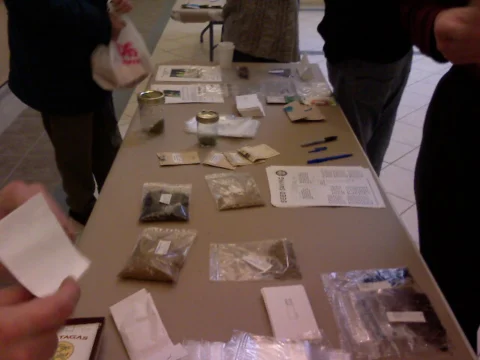

From the Namibian discussions
Local contributors described collecting wild seed, bartering with colleagues and harvesting within a growing network. Those relationships are valuable. Labelling and a small shared register can preserve the practical knowledge without publishing members’ private contact details.
Agree what belongs on the table
Accept confidently identified seed with a known source. Keep unidentified, potentially invasive, chemically treated or restricted material out of an informal food-seed exchange until its status is clear. Obtain permission for wild collection and check movement requirements before sending plants or seed across borders.
Give each lot a short record
- Write the crop, variety if known, collection year and a simple lot code.
- Note the growing area broadly, water conditions and whether seed came from several parent plants.
- Add germination-test date, sample size and result if available.
- State uncertainties: an unknown variety or possible cross should remain labelled as such.
Keep promises proportionate
Seed Savers Exchange emphasises crop identity, source, harvest date and parent-plant information. Saving seed from a named plant does not always preserve its exact characteristics, especially where cross-pollination is possible. Do not promise varietal purity, disease freedom or organic certification without evidence.
Close the learning loop
Agree that recipients will report emergence and performance rather than merely return any seed they have. Use a simple paper register or shared file with one keeper and a backup. Public summaries can describe results while private contact details stay with the organiser. Keep seed cool and dry during the event and avoid leaving packets in a hot vehicle.
Namibian climate and microclimate
“Grown in Namibia” covers very different temperatures, rainfall and salinity. Include enough context for a coastal gardener to recognise that an inland success may need adaptation. Local provenance is useful information, not a universal guarantee.
Your first practical step
Prepare a label and test record for one seed lot before arranging the next exchange. Ask the next grower to send a short result after planting.
Watch and adapt
Watch: Garden Planning for Seed Saving
Publisher: Seed Savers Exchange
Country and context: USA-based organisation; exact recording location not confirmed.
Open the video on the linked page. A planning lesson for keeping varieties and seed records useful.
The seed-saving lesson supports record keeping. Match isolation and storage methods to the actual crop and Namibian conditions.
Keep exploring
- Saving seeds
- Test saved seed before spending water on a bed
- Useful farm records: begin simply, then consider farmOS
Sources and further reading
Have you tried this in Namibia? Share the site conditions, method and result—including what did not work—with the Living Earth community. Local observations help the next person adapt the idea.