
Quince can give fragrant fruit for cooking. Before planting, find a named variety that has actually fruited in conditions like yours.
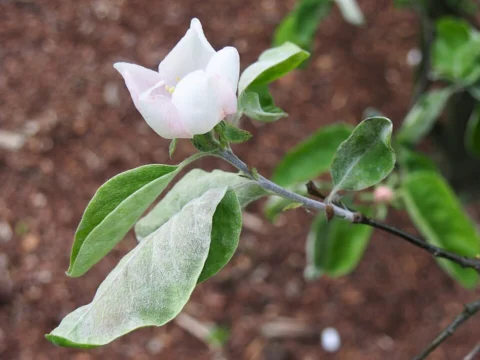

Start with the right tree
Ask for edible quince, Cydonia oblonga. Flowering quinces sold as ornamental shrubs are different plants. A named nursery tree gives you more information than an unlabelled seedling. The original fruit-tree list included quince; it did not identify a proven Namibian variety.
- Ask the nursery for the variety, rootstock and expected mature size.
- Ask where that variety has produced fruit locally, and with what irrigation.
- Choose a sunny, sheltered place with drainage and enough room for the mature tree.
- Plan water and protection from browsing before buying.
- Keep the label and record planting, flowering and harvest dates.
Look at your own patch
Walk around the proposed site in the afternoon. A tree beside a hot wall, a windy corner and a sheltered garden bed experience different conditions. Space for the roots and the ability to water deeply matter more than whether a planting hole looks neat.
Winter conditions influence deciduous fruit crops. Ask about cropping at your elevation and location; do not assume a variety that grows leaves on the coast will fruit like one inland. A report from a neighbour with similar conditions is more useful than an overseas planting month.
Water for fruit and healthy growth
The Royal Horticultural Society describes quince for a sunny, sheltered site with moisture-retentive but well-drained soil. Its British guide is useful for plant care, but its rainfall and seasons differ from Namibia. Read the RHS growing guide.
Use a modest mulched area around the tree and keep mulch away from the trunk. Check moisture below the surface before changing the watering routine. Water needs change with soil, wind, tree size and fruit load. There is no reliable universal number of litres for every Namibian garden.
“Tolerates dry conditions” should not become “produces a crop without water”. Start with one tree if your water supply is uncertain. Note how much water and labour it takes through the hardest part of the year before expanding.
When the tree struggles
- Leaves wilt: check moisture, drainage and root condition before adding fertiliser. Both dry and waterlogged roots can cause trouble.
- Flowers but little fruit: record cold nights, strong wind and watering around flowering. Look for a pattern over seasons.
- Shoots from below the graft: identify rootstock growth before pruning; it is not the named fruiting variety.
- Tree is outgrowing its space: ask for advice on the rootstock and gradual shaping instead of repeatedly cutting all branches back.
Photograph the whole tree, the leaves and the graft when asking for help. A close-up of one leaf alone often hides the cause.
Plan what you will do with the fruit
Quince is usually cooked. Try a small quantity in stewed fruit or another familiar cooked dish before planting several trees for household use. Fruit for preserves also requires jars, fuel, time and a suitable recipe. Do not count an untested preserve as shelf-stable food.
Record taste and the work involved, not only the weight harvested. A tree that crops well but produces fruit nobody wants to use may not be the best fit for a small garden. Share surplus for a cooking trial before expanding.
Watch and adapt
 Watch videoWatch: recognising rootstock growth on young quince trees
Keepers Nursery, United Kingdom. Watch how unwanted rootstock shoots are recognised. “May” belongs to the UK calendar; use the growth stage of your own tree. Publisher’s video page.
Keep exploring
Sources and further reading
Have you grown this in Namibia? Share your region, soil, water, tree age and result with the Living Earth community. A short local observation is useful even without a scientific trial. Tell readers what you saw, and encourage them to try a small test in their own conditions.