
An avocado cultivar name is only part of the buying decision. Rootstock, planting-material health, soil drainage, water quality and frost exposure can matter just as much. Prepare the site questions before arranging an expensive tree purchase.
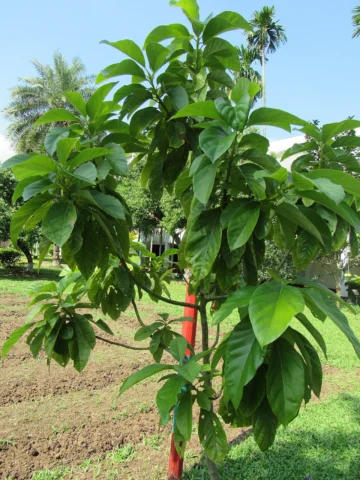
_tree_in_RDA,_Bogra_01.jpg)
From the Namibian discussions
A Namibian grower described the effort involved in sourcing selected avocado trees and participants exchanged cultivar suggestions. Those are useful leads, but the saved exchange is not a local comparison proving particular trees will remain small or fruit by a fixed age. Historical import details also need current confirmation.
Describe your growing conditions
Record the coldest part of the garden, wind exposure, drainage after irrigation and the quality of the available water. Florida extension guidance shows that avocado types differ in environmental response. Ask a nursery which rootstock and cultivar combination fits the conditions you can actually provide.
Ask for an identifiable plant
- Request the cultivar and rootstock names, where known.
- Check that the plant is healthy and the graft union is sound.
- Ask about its propagation source and local performance records.
- Obtain current movement or import requirements through the appropriate authorities before ordering across borders.
Treat flowering type as one factor
A and B flowering patterns can inform pollination planning, but flowering behaviour responds to conditions and a second tree is not a substitute for suitable climate and care. Discuss likely flowering overlap locally. Do not buy a large polliniser tree without considering the space and water it will eventually need.
Prepare establishment support
Have irrigation, suitable protection and a planting plan ready before delivery. Keep records of growth and flowering for several seasons. If the tree struggles, investigate roots, drainage, salinity and exposure before adding more fertiliser or replacing it with another fashionable cultivar.
Namibian climate and microclimate
Central Namibian frost, alkaline or saline water and hot dry wind can challenge a tree that performs well in a humid overseas garden. A protected courtyard may create an opportunity, but its advantages need observation rather than assumption.
Your first practical step
Take a short site description and water-quality information to a knowledgeable nursery before choosing a cultivar.
Watch and adapt
Publisher: ABC Gardening Australia
Country and context: Australia; exact filming locality not confirmed.
A layout lesson. Choose locally suitable species and examine sun, wind and water before copying rows or spacing.
Use the layout lesson to consider mature space and access. It does not establish avocado cultivar suitability for Namibia.
Keep exploring
- Avocado
- Fruit-tree rootstocks: ask what is beneath the graft
- Frost covers: a simple evening and morning routine
Sources and further reading
Have you tried this in Namibia? Share the site conditions, method and result—including what did not work—with the Living Earth community. Local observations help the next person adapt the idea.