
Water saved for a garden should not become a mosquito nursery. The most useful starting point is physical access: remove unnecessary standing water and make necessary storage difficult for mosquitoes to enter.
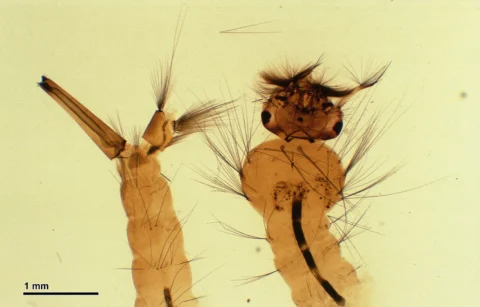
_Total_preparation;_larva.jpg)
From the Namibian discussions
Namibian growers suggested covering drum openings with mosquito gauze or dense shade net. Another contribution linked to a vinegar treatment. The covering idea fits a practical prevention approach, but shade percentage does not specify insect-proof mesh size, and a household vinegar dose is not a reliable general solution.
Inspect every opening
CDC guidance recommends tight covers on water-storage containers and screens where appropriate. A covered top is not sufficient if mosquitoes can enter an overflow, vent or gap around a pipe. Mesh must be small enough to exclude mosquitoes, well fitted and kept intact.
Make a weekly water round
- Check buckets, tyres, plant saucers, blocked gutters and discarded containers. Empty and scrub unnecessary water-holding items.
- Inspect storage lids, inlet screens and overflow screens. Repair gaps and remove leaves without defeating ventilation or safe overflow.
- Check for larvae in accessible water without leaning into or entering a tank.
- Record recurring problem spots and assign responsibility for shared drums and tanks.
Use treatment only for the right water use
If water cannot be drained or securely covered, ask local environmental-health advice about a suitable registered larvicide. A product must be appropriate for that container and its intended water use. Do not pour fuel, oil, household pesticide or improvised mixtures into stored water. Drinking-water safety needs a separate plan.
Avoid creating a second problem
Keep tanks and drums secure against children falling in. A screen should not block a designed overflow and cause water to undermine a wall or foundation. Inspect mesh after cleaning and storms. For a planted pond, choose a locally appropriate management plan rather than releasing non-native fish as a quick fix.
Namibian climate and microclimate
Even in dry areas, a small shaded container can retain water after surrounding ground dries. Irrigation leaks and repeated top-ups may maintain breeding sites through rainless periods. Coastal and northern sites can have different seasonal pressures.
Your first practical step
Walk around the home with a neighbour and identify five places water remains. Fix one cover or drain one unnecessary container today.
Watch and adapt
Watch: Don’t let mosquitoes breed in your yard
Publisher: University of California IPM
Country and context: USA; California context.
The page includes a short breeding-site prevention video. Use Namibian health advice for local disease risks.
Use the US demonstration for physical prevention. Local mosquito species, disease risks and registered products require Namibian health guidance.
Keep exploring
- Rainwater Harvesting in Arid Regions: Practical Solutions for Water Security in Southern Africa
- Chinese water chestnuts: a contained aquatic crop trial
- Natural Swimming Pool
Sources and further reading
Have you tried this in Namibia? Share the site conditions, method and result—including what did not work—with the Living Earth community. Local observations help the next person adapt the idea.