
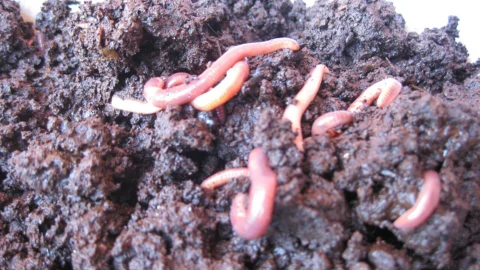
Liquid draining from a worm bin, an extract made from finished vermicompost and an aerated compost tea are different materials. Naming the liquid accurately is the first step toward understanding what it might do and how to handle it. More bubbles do not prove a better or safer product.
.jpg)
From the Namibian discussions
A Namibian note described aerating “worm pee” with molasses for 48 hours and praised the microbial activity. That is a local practice worth investigating, but the note supplied no microbial test, nutrient analysis or comparison crop result. Aeration and an active smell cannot identify the organisms present.
Identify the starting material
Write down whether the liquid drained through fresh feedstock or was deliberately extracted from finished material. Record the feedstock, age, additions and storage. Use separate labelled containers and equipment. Do not assume drainage from decomposing kitchen scraps has the same properties as a prepared vermicompost extract.
Keep food hygiene separate from enthusiasm
Sugars can feed unwanted organisms as well as desired ones. The university organic-crop guide discusses pathogen concerns with compost tea. Do not spray an unverified homemade brew onto ready-to-eat leaves or treat it as drinking water, animal medicine or a food ferment.
Design a modest plant trial
- Choose a few non-food plants and an untreated comparison.
- Keep soil, light and watering similar.
- Record the exact preparation and application, including any dilution.
- Watch for injury and compare growth over time rather than judging the brew by foam.
Check the worm system itself
Persistent excess drainage may be a reason to review the moisture and feed balance in the bin. Keep the worm habitat functioning well and use established vermicomposting guidance. If a liquid causes damage or its contents are uncertain, stop the trial; do not increase the concentration to force a result.
Namibian climate and microclimate
Warm Namibian conditions can change a brew quickly, while a shaded coastal container may remain much cooler. Record temperature and elapsed time. A recipe timed in another climate will not necessarily produce the same mixture.
Your first practical step
Label the liquid accurately and record its ingredients before deciding whether a small, non-food plant trial is worthwhile.
Watch and adapt
 Watch videoWatch: How to make great compost
Publisher: ABC Gardening Australia
Country and context: Australia; exact filming locality not confirmed.
A household composting demonstration. It is not a validated pathogen-reduction certificate for a particular manure batch.
The composting lesson supports good starting-material management. It does not validate the local 48-hour liquid preparation.
Keep exploring
Sources and further reading
Have you tried this in Namibia? Share the site conditions, method and result—including what did not work—with the Living Earth community. Local observations help the next person adapt the idea.