
Zinnias bring colour and insect activity into a food garden and can supply cut flowers. They are useful plants in their own right; their job need not be justified by claiming that they replace a large biomass shrub.
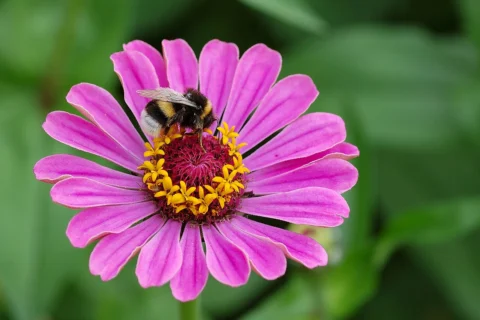

From the Namibian discussions
A Namibian grower reported that their zinnias had acclimatised and were self-seeding, then asked whether they could substitute for Mexican sunflower. Keep that local success in the record. Zinnia and Tithonia belong to the same plant family, but shared ancestry does not establish equal biomass, rooting, nutrient content or management needs.
Decide what you want from the flowers
University of Minnesota trials describe zinnias as prolific annual flowers, useful in beds and as cut flowers, with further bloom encouraged by removing spent heads. Select a variety for the available space and intended use. Observe which insects actually visit it in your garden instead of assuming a particular foreign pollinator will be present.
Start a manageable patch
- Choose a sunny position that fits the variety’s mature size and does not block access to vegetables.
- Sow or transplant according to the seed supplier’s instructions, after checking the local cold period. Label varieties.
- Water the root area and leave sufficient spacing for air and access rather than crowding plants for an instant display.
- Keep a few suitable plants for seed if that is your aim; harvest flowers regularly on the plants grown for cutting.
Observe self-seeding responsibly
Mark volunteer seedlings rather than pulling every unfamiliar plant. Keep those in useful positions and remove those that compete with crops or paths. Note whether the next generation resembles its parents; seed from hybrids need not reproduce the same flower form. Share a labelled seed lot with the grower’s location and season.
Compare the right functions
If the question is biomass for mulch, measure cut material and regrowth instead of treating every sunflower relative as interchangeable. If the aim is flowering habitat, compare flower duration and insect visits. A small zinnia patch can be successful even when it produces little mulch.
Namibian climate and microclimate
Sheltered gardens may support self-seeding while exposed beds dry before seedlings establish. Hot walls, frost and overhead irrigation change performance. Keep water use visible rather than describing a colourful patch as automatically drought-proof.
Your first practical step
Plant one small patch beside an existing bed and record flowering, water use and visitors. Share the conditions along with seed or a photograph.
Watch and adapt
 Watch videoWatch: Beneficial Insects and Natural Enemies
Publisher: University of California IPM
Country and context: USA; California context.
A supporting lesson on beneficial insects; identify the species actually present in your Namibian garden.
The supporting habitat lesson concerns beneficial insects. Use local observations to assess visitors; the featured foreign species are not a Namibian insect checklist.
Keep exploring
- Tithonia (Mexican Sunflower)
- Insect hotels and living habitat: make room for garden allies
- Saving seeds
Sources and further reading
Have you tried this in Namibia? Share the site conditions, method and result—including what did not work—with the Living Earth community. Local observations help the next person adapt the idea.