
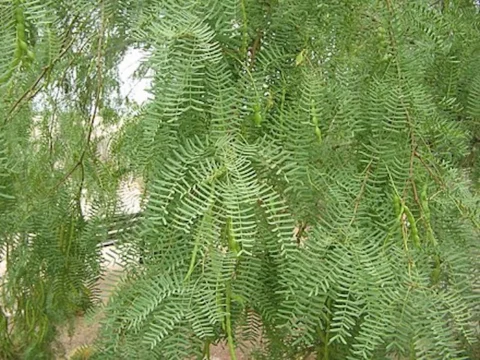
Prosopis, also known as mesquite in other countries, is a genus of flowering trees and shrubs that includes several species found in different parts of the world, including Namibia.
According to the Environmental information service of Namibia there are at least three species in Namibia. They can breed with each other and create mixes so they are difficult to keep apart in the field.
- Prosopis glandulosa – Honey mesquite (English); ‡khòńhai.s (Khoekheogowab); |nàra.s (Damara); !khàa.s (Nama) This is the most common one!
- Prosopis velutina – Common name: Velvet mesquite (English)
- Prosopis chilensis – Common name: Chilean Prosopis (English)
Uses and Benefits
- Livestock Forage: Prosopis trees provide valuable forage for livestock, particularly in dry and arid regions like Namibia. The leaves, pods, and even twigs are consumed by cattle, goats, and sheep.
- Shade and Windbreak: The dense canopy of Prosopis trees offers shade, which is crucial for both livestock and people in desert environments. They also function as effective windbreaks, helping to reduce soil erosion.
- Nitrogen Fixation: Prosopis trees are nitrogen-fixing plants, which means they have a symbiotic relationship with nitrogen-fixing bacteria in their root nodules. This enhances soil fertility and benefits surrounding vegetation.
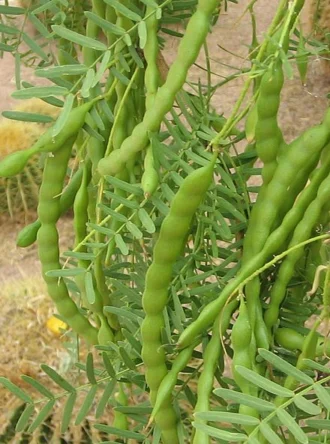
- Pod Harvesting: The edible pods of Prosopis trees are rich in protein and nutrients. In some regions, these pods are collected and used as a food source, providing sustenance during food scarcity.
- Wood and Charcoal: The wood of Prosopis trees is dense and durable, making it suitable for various applications, such as construction, furniture, and tool handles. Additionally, the wood is used for charcoal production.
- Medicinal Uses: In some cultures, Prosopis leaves, bark, and pods are used for their medicinal properties, including remedies for coughs, sore throats, and digestive issues.
- Erosion Control: The extensive root systems of Prosopis trees help stabilize soil and prevent erosion in areas prone to drought and wind.
- Coffee Substitute: Prosopis can be used as a Coffee substitute…see below 🙂

Issues
- Invasive Species: While Prosopis offers various benefits, it can also become invasive in some areas. The fast growth and prolific seed production of some species can lead to the displacement of native plants and disrupt local ecosystems.
- Water Competition: In arid environments, Prosopis trees can outcompete native vegetation for water resources, potentially affecting water availability for other plants and wildlife.
- Threat to Biodiversity: The invasive nature of some Prosopis species can negatively impact native flora and fauna, leading to a reduction in biodiversity.
- Land Degradation: In cases where Prosopis invades sensitive ecosystems or overruns agricultural lands, it can contribute to land degradation by altering soil characteristics and water availability.
- Fire Hazard: Dead branches and accumulated leaf litter in Prosopis stands can increase fire risk, potentially leading to more intense and frequent wildfires.
- Conflict with Agriculture: In certain situations, Prosopis trees can interfere with agriculture by competing for water and nutrients, affecting crop yields.
Certainly! Here is an additional ~800 words of original content to append to the bottom of your Prosopis page on growyourfood.africa, designed to reduce keyword density, improve SEO, and enrich the article with stories, recipes, and contextual insights:
Traditional Tales and Cultural Perspectives
In many dryland communities, especially across Africa and the Middle East, trees like mesquite (Prosopis spp.) have long held a place in folklore and oral storytelling. In a Nama tale from southern Namibia, it is said that the “Tree That Walks” once crossed the sands to bring life to the starving animals during a great drought. That tree, covered in long pods and hosting many thorns, was not native to the land but had heard the cries of thirst and hunger. As it wandered across the desert, its seeds fell behind it, giving rise to shaded groves and green oases in unexpected places. In gratitude, the jackal marked the trunks to guide future wanderers, a pattern still seen in the bark’s unique markings.
While this tale is allegorical, it captures a truth: Prosopis species are deeply resilient, often found greening otherwise barren places, their roots diving deep to access underground water. Such stories help contextualise the relationship communities have with these invasive-yet-useful species—both a curse and a blessing.
Recipes Using Prosopis Pods
When used properly, the pods of the mesquite tree can be transformed into highly nutritious food products. Below are a few simple traditional and modern recipes adapted for Namibian and southern African kitchens:
1.
Sweet Mesquite Pancakes
Ingredients:
- 1 cup mesquite pod flour (finely ground)
- 1 cup wheat flour (or alternative like sorghum)
- 1 egg
- 1 cup milk or dairy-free alternative
- 1 tbsp honey or date syrup
- ½ tsp baking powder
- Pinch of salt
Instructions:
- Mix all dry ingredients in a bowl.
- Add egg, milk, and honey, and whisk into a smooth batter.
- Cook on a greased pan until bubbles form, flip and cook other side.
- Serve with fresh fruit or moringa jam.
Mesquite flour adds a natural sweetness and a nutty, earthy flavour. It’s gluten-free and rich in calcium, magnesium, and lysine.
2.
Desert Energy Balls
Ingredients:
- ½ cup dates or raisins
- ¼ cup roasted ground nuts (e.g. marula or peanuts)
- 2 tbsp mesquite powder
- 1 tbsp sunflower seeds
- 1 tsp baobab powder (optional)
Instructions:
Blend all ingredients and form into small balls. Chill for 30 minutes before serving. Ideal for dry season snacking, especially for school children.
Permaculture Lessons from Prosopis
In regenerative agriculture, the presence of a fast-growing, nitrogen-fixing pioneer tree such as Prosopis can be a gift—if managed properly. Its aggressive root systems can break up hardpan soil and improve infiltration. Its pods feed livestock, its shade cools the soil, and its branches provide fuelwood. However, like many well-intentioned introductions, unmanaged growth can destroy grasslands and displace native biodiversity.
Several African farmers have started adapting alley cropping systems where Prosopis trees are pruned hard and spaced to create beneficial microclimates, while simultaneously controlling their spread. Combined with deep mulching, these systems reduce evaporation and promote understory growth. In such cases, Prosopis is transformed from a menace into a manager of moisture.
Prosopis-Based Enterprises
Across Kenya and Ethiopia, women’s cooperatives have begun producing mesquite flour as a local enterprise, marketed for its health benefits and used as a low-glycaemic sweetener. In parts of Sudan, the pods are mixed into traditional breads. In Niger, branches are turned into eco-charcoal using low-emission kilns, providing a more sustainable energy source than tree felling from native acacias.
In Namibia, there is growing interest in converting the invasive biomass into biochar, which enhances soil health, stores carbon, and reduces erosion. Such models could provide both employment and climate benefits. A handful of entrepreneurs have even explored mesquite honey—produced by bees foraging on the flowers—as a potential export niche.
Recommended Books and Resources
For readers wishing to go deeper, the following books and publications offer rich insights:
- “Mesquite: An Arboreal Love Affair” by Gary Paul Nabhan – A lyrical book blending science, culture, and cuisine around mesquite’s role in dryland restoration and food sovereignty.
- “The Prosopis Juliflora-Prosopis Pallida Complex: A Monograph” by C. Tewari – A more academic exploration of species variations, invasiveness, and uses.
- “Forest Products and Local Livelihoods in Drylands of Africa” (FAO) – Includes case studies on Prosopis utilisation for income generation.
- Drylands Restoration Initiative (ICRAF) – Offers toolkits on how to control Prosopis invasiveness while leveraging its ecosystem services.
A Final Word: Rethinking the Invader
It is tempting to frame Prosopis only as a problem. But perhaps the wiser approach is to learn from it. Why does it grow so well when others fail? What does its success say about our degraded landscapes? In many ways, Prosopis is simply filling a vacuum—one created by deforestation, overgrazing, and climate pressure. Its dominance may be a symptom, not a cause.
From the Sahel to southern Namibia, many land stewards are now experimenting with integrated systems—where Prosopis is pruned aggressively, contained by grazing, and its benefits harvested through planned use. These approaches may not fully eliminate the tree, but they flip the narrative from war to coexistence.
As with fire, flood, or wind: the challenge is not to destroy it, but to dance with it.
Let us know your experience managing Prosopis in your area. What methods worked? What challenges remain? Your input could help us all better navigate this thorny friend.
Managing Prosopis
In Namibia, the management of Prosopis involves a balance between utilizing its benefits while preventing its invasive spread and negative ecological impacts. Approaches to controlling Prosopis invasions include mechanical removal, controlled burning, and selective herbicide use. Sustainable management strategies consider both the positive and negative aspects of Prosopis to ensure its integration into the ecosystem without causing ecological harm.
The Orange-Senqu River Commission (ORASECOM) is the institution responsible managing the resources of the Orange-Senqu River basin, a transboundary resource shared by Botswana, Namibia, Lesotho and South Africa. It is helping to facilitate the marketing and sales of prosopis products.
Worthwhile videos



Watch videoWatch this video – watch this reel on Instagram – about a team in RSA making MannaBrew – a coffe alternative from Prosopis seed pods. – made near Prieska. https://mannabrew.co.za/
A Tree of Many Faces: Thorny Friend or Unwanted Guest?
Across southern Africa’s drylands, one particular thorny tree has become a fixture on the landscape. To some, it is a menace choking out native grasses. To others, it is a shade-giver, a livestock feeder, a fuelwood source, and even a food tree. Its pods hang like curled beans, sweet-smelling and nutritious, especially in times of scarcity. Its roots reach deep into the earth, anchoring soil that might otherwise wash away in flash floods.
In villages on Namibia’s edge, elderly farmers tell of years when everything turned to dust—except under the canopy of this resilient shrub. There, animals could rest, birds would nest, and families could gather dry sticks for the cooking fire even after months of drought. Children chewed the pods like sweets, long before modern candies appeared in roadside stalls.
But it wasn’t always there.
Elders recall a time when these trees were unknown, when the plains were open, dotted with camelthorn and acacia, not thickets of invasive shade. As such, the spread of this tree is often seen as both salvation and warning: a reminder of changing climates, shifting ecosystems, and sometimes unintended consequences of human decisions.
Food for the Future?
When milled into fine powder, the pods yield a rich, subtly sweet flour that blends well with other grains. In Kenya and Tanzania, small bakeries use it to make biscuits, porridge mixes, and even baby food supplements. It’s not only tasty—it’s high in dietary fibre, low in glycaemic index, and rich in minerals. The slight caramel note makes it popular in smoothies and snack bars in places like South Africa and California.
But in much of Namibia, this potential remains untapped.
Few know how to harvest and process the pods safely, and even fewer have access to grinding equipment fine enough to produce usable flour. Yet the possibilities are enormous. In areas with limited access to wheat or maize, this tree offers a reliable annual crop—provided the pods are collected before fungi or insects damage them.
One initiative in central Namibia tried pairing solar dryers with hand-operated mills. The result was a nutritious supplement that could be added to school meals, porridge, or bread. Though the project was small-scale, it opened eyes to new uses for an old problem.
Fuel, Fences, and Forage
For communities where electricity is unavailable or unaffordable, firewood remains vital. The hardwood of this species burns hot and long, perfect for making charcoal or slow-cooked stews. Its dense branches are used to make corrals, kraals, and fence posts—some lasting 10 years or more before decaying.
Livestock—especially goats—graze readily on its leaves and pods. While too much can cause bloating or weight gain, moderate feeding is valuable, particularly during dry spells when other forage is scarce. Some ranchers report that herds seek out the fallen pods over other dry grasses.
A study in Botswana suggested that when managed carefully, these trees could actually enhance grazing systems by offering year-round protein. The trick is to prevent overgrowth while maximising the harvest from pruned branches and pods. In this sense, what was once viewed as a weed becomes a working part of the farm.
Living with the Invader: A New Approach
Instead of trying to eliminate it, many farmers are exploring how to work with the species, integrating it into regenerative systems. In India’s Thar Desert, for example, thorn forests are actively managed for pod collection, charcoal, and fencing material. In Sudan, large-scale biochar projects are turning the biomass into soil-enhancing carbon.
Namibian researchers have proposed similar uses: turn encroachment into opportunity. Create youth jobs by training teams to harvest pods, dry them hygienically, and mill them into flour. Provide cookstoves that use wood or charcoal more efficiently. Teach farmers how to coppice the trees for ongoing yield without uncontrolled spread.
Even in Windhoek, experimental gardens are trying out windbreak designs using thorn species to shelter vegetables from drying winds. In areas with bare sandy soils, a well-managed shrub row can reduce erosion and trap dust, allowing native grasses to return in the understory.
A Final Thought
Nature rarely gives us simple stories. What some call a pest, others call a gift. The same tree that outcompetes native plants also feeds hungry animals. The same thorns that block footpaths offer the strongest fuel. It all depends on perspective—and on how we choose to act.
Rather than trying to return the land to a version of the past, perhaps it is time to envision a new future—where even the thorniest trees have a role in healing the land, feeding the people, and teaching us resilience in the face of change.