
Lactic acid bacteria preparations are discussed in natural farming, but a homemade mixture is not automatically identical to a published preparation. A useful trial records exactly what was made and compares a small treatment with an untreated group. That helps turn enthusiasm into knowledge another grower can use.
.jpg)
From the Namibian discussions
Namibian contributors discussed LAB alongside mixtures containing ingredients such as eggshell, vinegar, banana peel, yeast and minerals. They mentioned widely differing dilution ratios and acknowledged that they were still learning. Preserve that experimentation without presenting the different mixtures as interchangeable or the suggested rates as proven recommendations.
Separate the recipes
Give each preparation a name and batch date. Record every ingredient and amount, fermentation conditions and storage. University of Hawai‘i guidance describes a particular LAB preparation; adding other ingredients creates a different mixture. If many things change together, a growth response cannot be attributed to LAB alone.
Start with a clear question
For example: does this preparation change visible growth in a small group of the same non-food plant compared with ordinary care? Keep the water, potting mix and light similar. A first trial on non-food plants avoids treating an experimental brew as a food-safety-tested spray.
Measure rather than guess
- Use a measured volume and record the final dilution unambiguously.
- Photograph treatment and comparison plants at the start.
- Repeat observations at the same interval and note leaf injury or decline.
- Stop if damage occurs and retain the unsuccessful result in the record.
Share the limits as well as the result
State the number of plants, duration and site conditions. More green growth does not by itself prove disease protection, microbial identity or better fruit quality. Do not consume a garden preparation or apply it to people or animals because it is described as natural.
Namibian climate and microclimate
Fermentation can behave differently in a hot inland room and a cool coastal kitchen. Record actual conditions rather than assuming a fixed number of hours gives the same product everywhere. Clean handling and clear labels remain essential.
Your first practical step
Write a one-page recipe and comparison plan before preparing the next experimental batch.
Watch and adapt
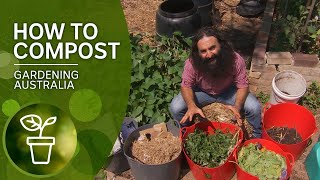 Watch videoWatch: How to make great compost
Publisher: ABC Gardening Australia
Country and context: Australia; exact filming locality not confirmed.
A household composting demonstration. It is not a validated pathogen-reduction certificate for a particular manure batch.
This supporting lesson concerns compost management, not LAB production. Use the linked Hawai‘i publication to understand the specific LAB method being discussed.
Keep exploring
- EM (effective micro-organisms)
- Organic Fertilizer
- Run a small garden comparison that others can learn from
Sources and further reading
Have you tried this in Namibia? Share the site conditions, method and result—including what did not work—with the Living Earth community. Local observations help the next person adapt the idea.