
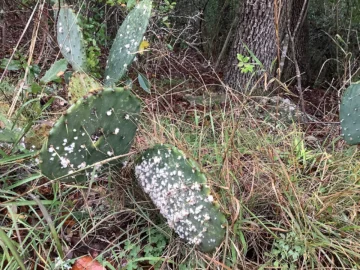
Inspecting a few new pads is easier than dealing with a pest throughout an established cactus planting. Keep incoming material apart while you check its identity, health and source. White waxy colonies deserve attention, but a photograph alone may not establish the exact insect species.

From the Namibian discussions
A cochineal video was shared in the Namibian collection. It raises an important question for anyone moving cactus planting material: what could be travelling with the pads? The saved item did not document a local treatment trial or a confirmed outbreak location.
Look closely before moving material
Inspect both surfaces, edges and sheltered joins. Photograph anything unusual in good light, including the whole plant and a close view with scale. Ask a knowledgeable plant-health adviser to identify the problem. Avoid distributing pads from a plant with unexplained colonies or decline.
Keep the source traceable
- Record where and when the material was obtained.
- Give each incoming batch a label and separate holding position.
- Check repeatedly for changes before adding it to a larger planting.
- Keep tools and handling areas from spreading suspect material between batches.
Distinguish uses and species
Some cochineal insects are associated with dye production; other species can cause serious cactus damage. FAO’s regional cactus-pest material shows why the name alone is insufficient. Do not interpret a dye-harvesting demonstration as evidence that an infestation is harmless to your crop.
Seek a targeted response
Ask for locally appropriate advice once the pest and host are identified. Avoid copying a spray mixture from a short video without checking suitability and current permitted use. Record which plants were affected and any action taken. If removal is advised, get guidance on containing and disposing of infested material rather than sharing or dumping it.
Namibian climate and microclimate
Dry conditions do not rule out insect problems. Dense plantings, sheltered corners and movement of pads can matter as much as regional climate. Compare healthy and affected plants without carrying suspect material around the garden.
Your first practical step
Inspect and label the next batch of cactus pads before it joins your established plants.
Watch and adapt
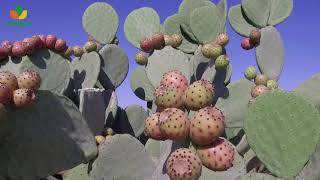 Watch videoWatch: Cactus pear — the green gold
Publisher: ICARDA
Country and context: International dryland research context; exact filming country not confirmed.
The publisher describes a lesson on establishing a cactus orchard. It does not identify an unknown plant or supply a complete livestock ration.
Use the cactus reference for background, then obtain identification and advice for the pest actually present at your site.
Keep exploring
- Cochineal
- Cactus pads: keep useful establishment records
- Cactus fodder: identify the plant before feeding it
Sources and further reading
Have you tried this in Namibia? Share the site conditions, method and result—including what did not work—with the Living Earth community. Local observations help the next person adapt the idea.