
Rice can be an important food and trading crop in suitable settings. For most arid Namibian sites, the first decision is whether the whole water-and-processing system makes sense, rather than how to reproduce a photograph of a flooded field.
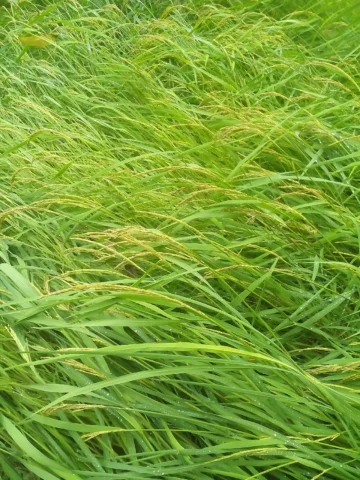

From the Namibian discussions
A Namibian discussion pointed to successful smallholder rice production and marketing in Malawi. That is a useful African example. It does not show that a particular Namibian water supply, soil, milling service or buyer can support the same crop.
Know which rice system is being proposed
Rice production includes different water regimes and varieties. IRRI’s alternate wetting and drying method concerns managed irrigated rice: it reduces continuous flooding under specified conditions. It does not mean that any rice variety can be left dry or grown with negligible water. Obtain locally relevant agronomic advice before choosing a system.
Work through the full chain
- Document the water source, reliability, quality, permissions and pumping cost. Include competition with household and existing farm needs.
- Find a variety and planting window suited to the proposed system, with a realistic route to obtaining seed.
- Confirm where the crop will be dried, dehulled or milled and how broken grain and losses affect the saleable yield.
- Speak to an actual buyer about quality, quantity, packaging and delivery before budgeting an income.
Compare alternatives fairly
Compare rice with a crop already known locally using the same available land, water and labour. Include establishment, weed management, harvesting, drying and transport. Record water in cubic metres and grain in kilograms. An attractive field yield is not the same as an attractive margin after pumping and processing.
Keep a trial bounded
If the water and market questions are answered, agree a small supervised trial with an agricultural adviser. Measure inputs and harvested grain rather than extrapolating a video’s results. Maintain drainage and mosquito management, and check that a trial does not alter neighbouring water access or natural wetland habitat.
Namibian climate and microclimate
Northern river or irrigation settings cannot stand in for the central plateau or coastal desert. Evaporation, cold periods and water salinity can change the crop’s prospects. Even two neighbouring fields may retain water differently.
Your first practical step
Prepare a water-and-processing budget before buying seed. If either remains uncertain, investigate existing local grains as a more immediate food option.
Watch and adapt
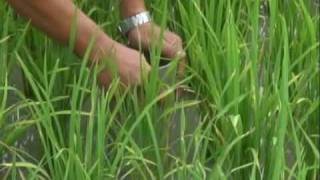 Watch videoWatch: Alternate wetting and drying
Publisher: International Rice Research Institute
Country and context: Philippines-based institute; exact filming country not confirmed.
A rice-water management lesson. It does not establish that rice is an appropriate use of scarce water at your site.
IRRI’s demonstration explains a managed irrigation technique. Ask an agronomist whether the soil, variety and water control at your site meet its requirements.
Keep exploring
Sources and further reading
Have you tried this in Namibia? Share the site conditions, method and result—including what did not work—with the Living Earth community. Local observations help the next person adapt the idea.