
An insect hotel can make small wildlife easier to observe, but it is only one part of a living garden. Flowers, undisturbed nesting places and a supply of suitable habitat matter throughout an insect’s life.
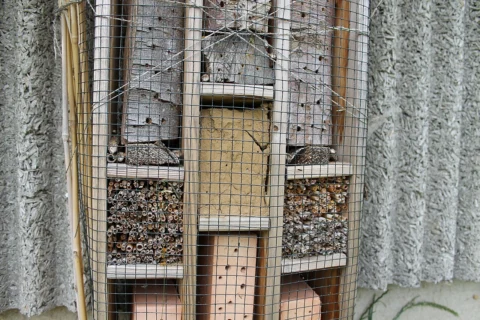
Photo: ThatIlja · Original image · CC0. Wikimedia display-size version; no crop or content edits.

From the Namibian discussions
The insect-hotel idea was saved among the Namibian group material. The recovered text contains no account of occupancy or crop results. This guide invites local experience: which insects use these structures here, and which designs remain healthy through our seasons?
Where it fits
A small home garden, school or shared growing space can become a place to watch pollinators and predators. Begin with habitat already present. You do not need a large purchased hotel to participate.
Start with living habitat
The Xerces Society recommends natural nesting features alongside flowers and shelter. Some bees nest in soil, others in stems or cavities; a hotel serves only part of that diversity. Retain suitable standing stems and small undisturbed patches where they do not create a fire or access problem. Its guidance is based mainly on North American insects, so observe local occupants rather than importing its species assumptions.
If you add a nesting structure
- Choose a small, accessible structure whose nesting materials can be inspected and replaced appropriately.
- Keep it stable and protected from persistent wetting.
- Record occupants with photographs taken from outside, without opening active nests.
- Plan maintenance before buying or building more units.
Artificial nesting sites can concentrate parasites and disease. Occupancy alone does not demonstrate a benefit; maintenance is part of the commitment. Avoid moving unidentified occupied nests between gardens.
Watch what the insects do
Visit at different times of day. Note whether insects collect pollen, bring prey or seal holes. Photograph visitors and the flowers they use. Ask a knowledgeable local observer to help identify them before deciding they are pests.
Namibian conditions and microclimate
A sunny wall can become much hotter than the surrounding air, while a roofed corner may stay shaded and dry. Compare potential positions during the hottest hours. Keep flowering plants within your water budget; small patches that persist can be more useful than a large display that fails in the dry season.
Try it locally and share what happens
Choose one habitat feature and photograph it monthly. Record flowering, nesting activity and maintenance. Share the region, sun exposure and season with any recommendation.
Watch, understand, adapt
Natural enemies and beneficial insects
Country and context: United States — University of California IPM webinar; exact filming location not stated.
Learn to recognise the roles of predators and other beneficial insects. This is background for observation, not a Namibian insect-hotel design.
 Watch video▶ Watch at the source
Apply it locally: Identify local insects independently. California’s species, irrigation and seasons differ from Namibia’s.