
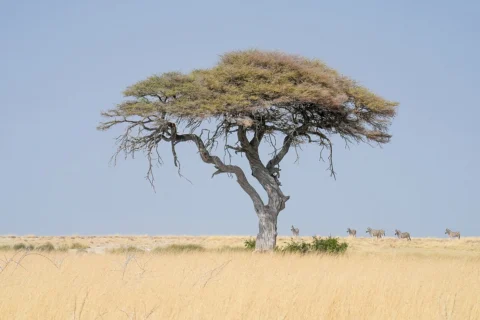
Camelthorn, Vachellia erioloba, is a characteristic tree of dry southern African landscapes. Older references call it Acacia erioloba. Its shade, habitat and long life make protecting existing trees and young natural regeneration a useful starting point.

From the Namibian discussions
Namibian growers included camelthorn in the indigenous-tree planting list. The request supports interest in growing it, but does not specify a tested germination method or local growth rate. Observations from existing trees and seedlings can turn that interest into practical knowledge.
Plan beyond the seedling
SANBI describes a drought-adapted tree with hard-coated seed. Established trees and newly planted seedlings have very different access to water. Research compiled in South Africa also shows variable growth, so do not promise rapid shade from a single annual growth figure.
Protect what is already growing
Walk the property for small seedlings before clearing or mowing. Mark useful individuals and consider simple protection from browsing and trampling. Keep people safe around thorns, especially beside play areas and narrow paths. Before collecting material, pruning or removing trees, confirm applicable Namibian requirements with the responsible authority; a South African species page is not a statement of Namibian law.
Establish a small planting well
- Choose a spacious position after considering the mature crown, services and access.
- Obtain sound planting stock, or use a reliable species-specific nursery method for hard-coated seed.
- Handle roots carefully, protect the young tree and check moisture through establishment.
- Record water input, height, crown development and survival after dry and cold periods. Keep mulch clear of the trunk.
Assess shade and landscape value
Observe where existing trees shade livestock, people or soil at different times of day. A tree that is valuable in an open grazing landscape may be poorly placed beside a small roof or garden path. If pods are intended for livestock, discuss identification, quality and their place in the complete ration with a competent adviser rather than treating a wild feed as unlimited.
Namibian climate and microclimate
Drought tolerance develops within a particular rooting environment. A seedling in a pot or disturbed soil may dry out quickly even beside a healthy old tree. Local soil depth, browsing and establishment care can matter more than a generic national climate description.
Your first practical step
Find and protect one suitable naturally regenerating camelthorn, or plant one healthy nursery tree and keep a simple establishment record.
Watch and adapt
 Watch videoWatch: Build a Nursery & Grow Trees
Publisher: Community Forests International
Country and context: Exact filming country not confirmed; Swahili with English subtitles.
A general seedling-care lesson, also catalogued by World Agroforestry. It is not a species-specific growing demonstration.
Use the nursery lesson for handling and labelling. Camelthorn seed-coat treatment and root care require a species-specific method rather than copying another tree’s procedure.
Keep exploring
- Shepherd’s tree: value the Boscia albitrunca already in the landscape
- Trees – Start here
- Garden weather records: learn what happens at your own site
Sources and further reading
Have you tried this in Namibia? Share the site conditions, method and result—including what did not work—with the Living Earth community. Local observations help the next person adapt the idea.